
A comeback doesn’t show up as one line on a P&L — it shows up as four separate losses stacked on top of each other, and most of them never get tracked as a single number. That’s part of why they’re expensive in a way that’s easy to underestimate until someone actually adds it up.
The Four Layers of a Comeback’s Real Cost
Direct labor loss. The redo gets paid for once — by the shop, not the customer. Whatever the job pays a technician the second time around is money that doesn’t get billed to anyone.
Opportunity cost. The bay doing the redo isn’t available for a new job. If a comeback ties up a lift for two hours that could have gone to a new customer vehicle, at a documented labor-value rate around $89/hour, that’s roughly $178 in opportunity cost alone — on top of the unpaid redo labor, not instead of it. That’s an illustrative estimate, not a fixed industry number, but it’s the piece most cost breakdowns leave out entirely.
Reputation cost. A customer who brings a vehicle back for the same problem has a reasonable reason to question the shop, whether or not they say so out loud. This one doesn’t show up on an invoice at all — it shows up later, in whether that customer comes back for the next service or goes somewhere else.
Parts and warranty loss. A part replaced based on a guess rather than a confirmed fault is a part paid for that wasn’t the problem — and if the original failure traces back to an installation error rather than a defective part, that’s not something a manufacturer warranty typically covers.
None of these four show up as “comeback cost” on their own. Added together, they’re why a comeback is worth treating as a real number, not a shrug.
Why Comebacks Happen (Hint: It’s Rarely About Skill)
The instinct is to treat a comeback as a competence problem. Most of the time, it isn’t. Connector pinouts and torque sequences can differ between model years of the same nameplate — a spec that was correct on last year’s version of the same truck can be wrong on this year’s without anything about the tech’s skill changing at all. A remembered number from a similar-looking job, or a misread line on a dense PDF page, produces the same outcome as not knowing the answer: a repair based on something other than the confirmed spec for the exact vehicle.
That’s an information problem, not a training problem — and it’s the specific thing a citation is built to catch before it turns into a comeback.
What a Cited Source Actually Changes
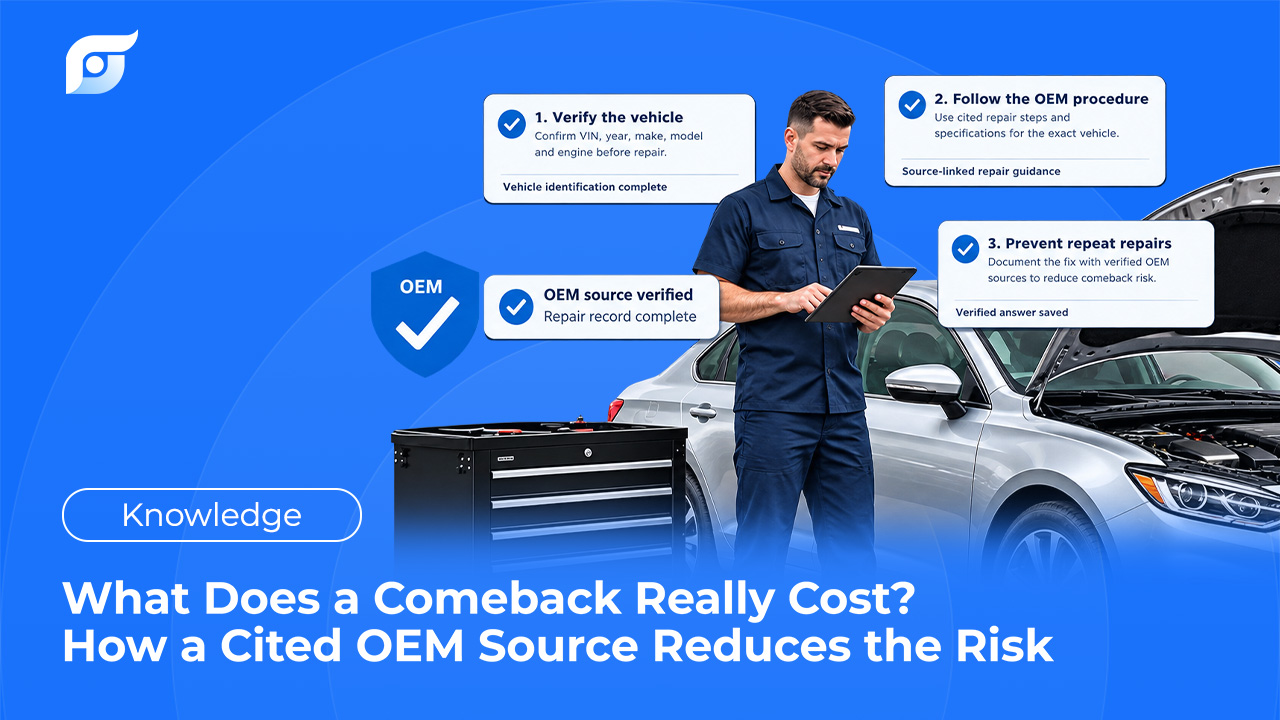
An answer without a source asks a tech to trust it on tone. An answer with a citation — the document, the manufacturer, the model year — gives a tech something to check before it goes into the repair. That doesn’t eliminate the possibility of a comeback; a citation can’t fix a misdiagnosis or a part failure unrelated to the spec. What it reduces specifically is the risk of a wrong number used without noticing it was wrong, because there’s something to verify against instead of a number taken on faith.
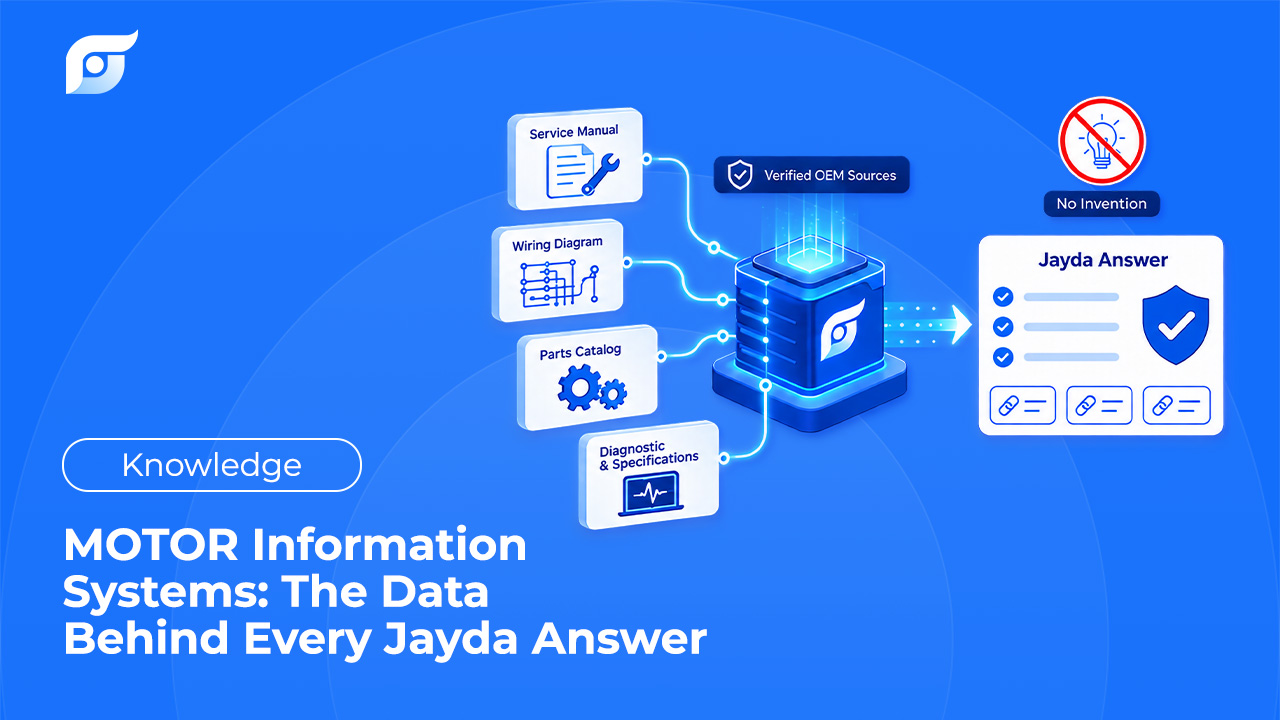
Jayda’s AI is used only to match a question to the right OEM content — it doesn’t generate the spec, which means the citation isn’t a courtesy link, it’s the actual source the answer came from.
What This Looks Like on a Real Lookup
Ask Jayda something like “head bolt torque sequence, 2020 Silverado 5.3L” and the answer comes back matched to that exact engine and trim, with the source document and model year attached — so before it goes into the torque wrench, it’s a number that’s been checked, not just read once off a page that might belong to a different year.
Checklist: Is Your Shop’s Data Layer Protecting You?
- Can a tech see exactly which document and model year a spec came from, or just the number itself?
- Does looking something up take long enough that techs sometimes skip it and go from memory instead?
- When a spec is uncertain, does the tool say so, or does it always return something?
- Is the answer matched to the exact VIN or trim, or the closest-sounding configuration?
- If a comeback happened this month, was the root cause a wrong spec that was never checked against a source?
Frequently Asked Questions
Does a cited source guarantee a comeback won’t happen? No — a citation reduces the risk of a wrong spec going unnoticed, but it can’t prevent every cause of a comeback, including misdiagnosis or an unrelated part failure. It’s a risk reducer, not a guarantee.
Is this really about technician skill? Rarely, on its own. The same nameplate can carry different specs across model years or trims, which means a correct number from a similar job can still be wrong for the exact vehicle in front of you — independent of how experienced the tech is.
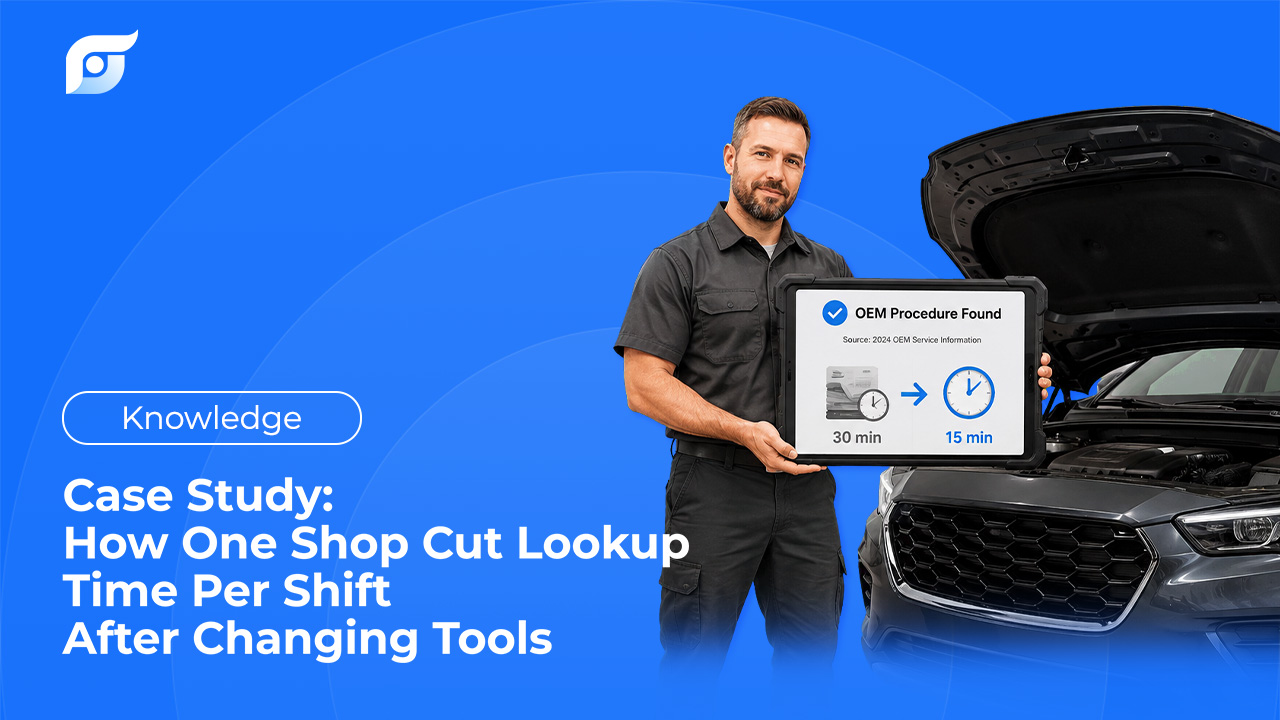
How is this different from just double-checking a manual page? The difference is what’s fast enough to actually happen mid-job. A citation that takes seconds to check gets checked; a full manual page that takes minutes to re-read often doesn’t, especially under time pressure.
Does tracking comeback cost require special software? No — the four-layer breakdown above can be tracked with normal shop records. What it usually takes is deciding to add up the opportunity cost and reputation impact instead of just the redo labor and parts.
If comebacks are a cost your shop hasn’t broken down into all four layers, contact us to see how source citations fit your team’s workflow. If you’re a technician working solo, start a free trial and check the citation on your next spec before it goes into the wrench.