It’s short enough to paint on a shop wall, which is usually a warning sign for a phrase. Most of them mean nothing by Friday. This one survives because it describes something techs already do, and it names the difference between a repair you can defend and one you hope holds. On a real job it comes down to four questions, all answerable before the first fastener moves.
Quick Answer: “Know before you wrench” means four checks before the work starts. Know the build, not just the year and model, because documents are scoped by engine, sub model, and often build date. Know whether the job is already documented in a bulletin or covered by an open recall, which changes both the procedure and who pays. Know the number and what it assumes – a torque value carries conditions like clean, dry threads, a sequence, and sometimes a one-time-use fastener, and it assumes your wrench is still accurate. Know where your line is today, meaning the work that needs certification or equipment you don’t have yet, such as high-voltage systems or ADAS calibration. None of this is hesitation. It’s the part of the trade that doesn’t show up in a flat-rate time.
1. Know the Build, Not Just the Model
Year, make, and model identify a vehicle for the service writer. They don’t always identify it for the repair. The same model year can carry different transmissions, different stud sizes, different calibrations, and manufacturers scope their documents accordingly.
Ford’s 10R80 bulletin 20-2117 applies to 2017–2018 F-150s built on or before 20 November 2017. Two trucks on the same lot, same badge, same model year, and only one is covered. The 17-character VIN is what settles it, and NHTSA’s free vPIC decoder will return make, model year, engine configuration and displacement from it before you open any service information.
2. Know Whether Somebody Already Wrote This Down
Before diagnosing a complaint that sounds familiar, check whether the manufacturer has already documented it. A technical service bulletin can name the cause, specify a revised part, or replace the procedure you were about to follow with a software update.
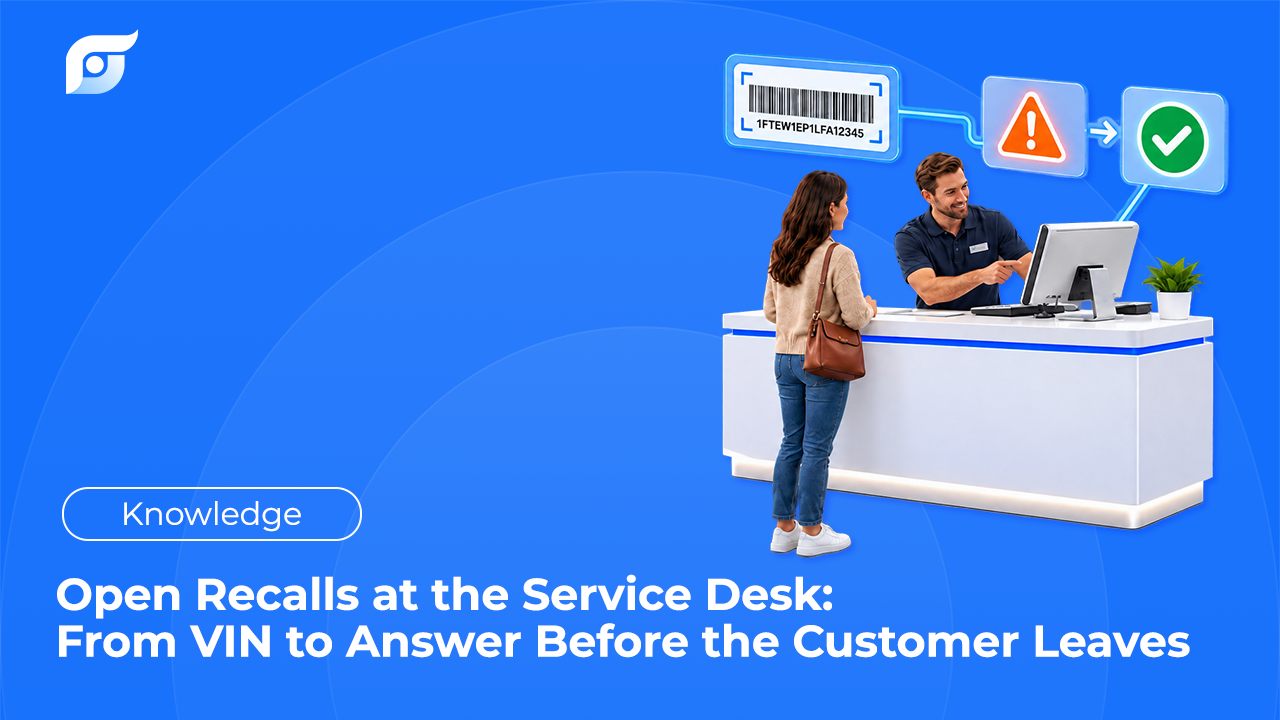
Recalls matter even more, because they change who pays. A recall repair is performed free of charge by an authorized dealer, regardless of the vehicle’s age or mileage, and recall status is VIN-specific, so check the 17-character VIN at nhtsa.gov/recalls. Telling a customer their repair is free when a campaign covers it costs you nothing and buys more trust than any discount. Keeping the two straight is the point of the difference between a TSB and a recall.
3. Know the Number, and What the Number Assumes
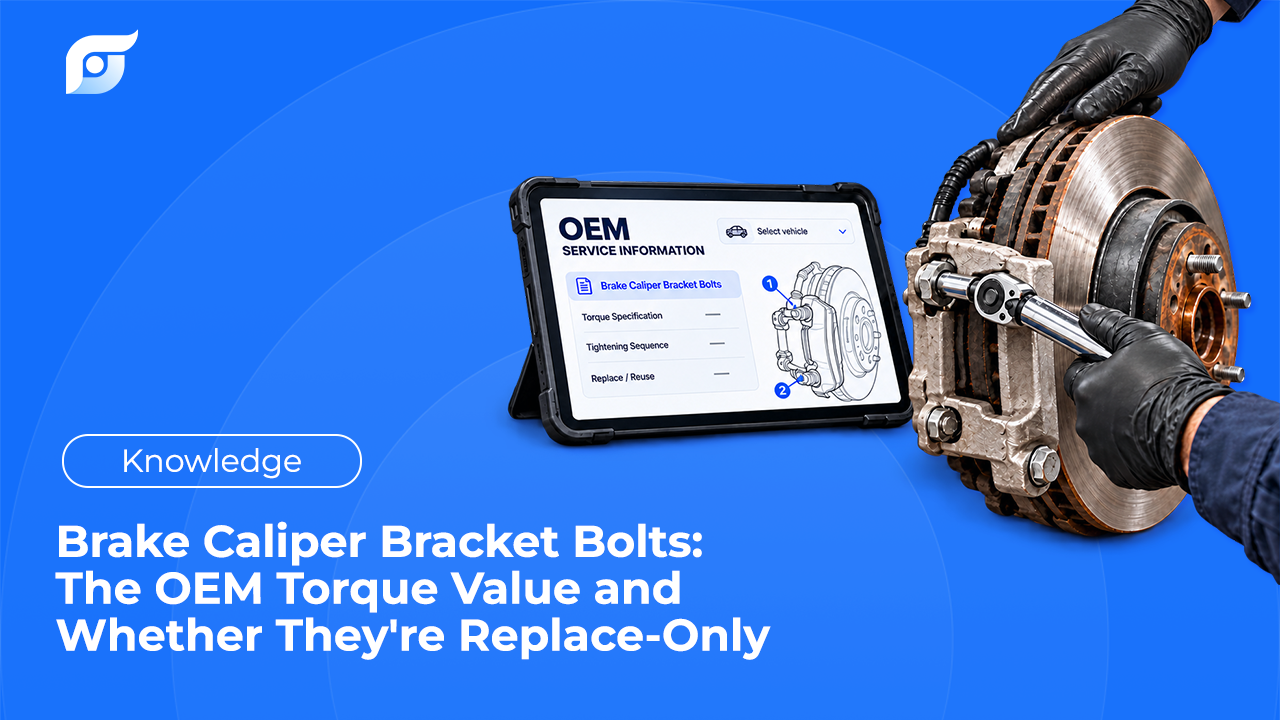
A torque spec is not a single fact. It comes with conditions: clean and dry threads unless stated otherwise, a tightening sequence, a number of passes, sometimes a new fastener because the old one stretched on purpose. Strip those away and the number alone can still produce a wrong joint.
How much does precision matter on a fastener everyone treats as routine? In its federal recall filing for campaign 22V-675, Ford reported that a plant tool had been set to a nominal 170 N·m instead of the intended 200 N·m on 2022 F-150 Raptors with 37-inch tires. An audit of 477 vehicles found 236 with low residual torque, and the result was a recall across 1,519 trucks for a risk the filing describes as potential wheel separation. That is a 30 N·m gap, applied by an automated tool in a factory.
Knowing the number also means knowing the tool that applies it. The common default for hand torque wrenches, based on ISO 6789-2, is calibration every 12 months or 5,000 cycles, whichever comes first, where no other control procedure is in place. Vendor recommendations vary beyond that, from roughly 5,000 to 10,000 cycles, so the honest answer is to follow your wrench manufacturer’s data sheet and recalibrate sooner after a drop or heavy use. A spec read correctly and applied with an uncalibrated wrench is still a guess, just a well-informed one.
Those conditions live in the manufacturer’s own text, which is the difference between an OEM procedure and a consolidated aftermarket chart.
4. Know Where Your Line Is Today
Knowing what you can’t do yet is knowledge too, and on modern vehicles the boundary is specific rather than vague.
Anything behind the orange high-voltage cabling on a hybrid or EV requires ASE L3 (Light Duty Hybrid/Electric Vehicle Specialist) certification or equivalent OEM training, a verified zero-energy state confirmed with a CAT III-rated meter, and insulated Class 0 gloves rated for the pack voltage. That is not a careful-DIY job or a stretch assignment for a tech who is good with electrical. It is certified work, full stop. Plenty of other work on the same vehicle, including friction brakes and 12V service, is ordinary.
ADAS is the quieter version of the same question. Whether a camera or radar needs calibration after alignment, suspension work, or glass replacement depends on the manufacturer and the specific system, and a sensor can be out of calibration without setting a code or lighting a lamp. The authoritative answer is the OEM’s position statement or service information for that vehicle, not a general rule, and checking it before the car goes back on the road is part of the same habit as checking a torque spec.
What Knowing Actually Buys You
Three things, none of them abstract.
- A repair you can defend. When a comeback lands, the question is always what you used. “The manufacturer’s procedure for that build, dated” is a complete answer. “That’s the number I’ve always used” isn’t.
- An estimate that holds. Quoting from OEM labor times and the documented procedure beats quoting from memory, especially on a job that turns out to include a bulletin step nobody priced.
- The standard the next tech learns. Whatever the senior tech does in front of a new hire becomes the shop’s method within a month. If looking it up is normal, it stays normal.
There’s a version of this trade that treats looking things up as a confession. It isn’t. Nobody carries the fastener specs for 43 manufacturers in their head, and the techs who get called when a job goes sideways are usually the ones with the procedure already open. Knowing where the answer lives is a skill; pretending you don’t need it is a liability.
Where the Answers Come From
All four checks depend on reaching OEM repair information for the exact vehicle, with the source visible. That’s what Jayda is built to do — retrieve the manufacturer’s document and show where it came from, rather than write an answer about it. The judgment stays where it has always been, which is the whole argument behind keeping AI on the searching side of the work.
Know the build. Know if it’s documented. Know the number and its conditions. Know where your line is. Then wrench.