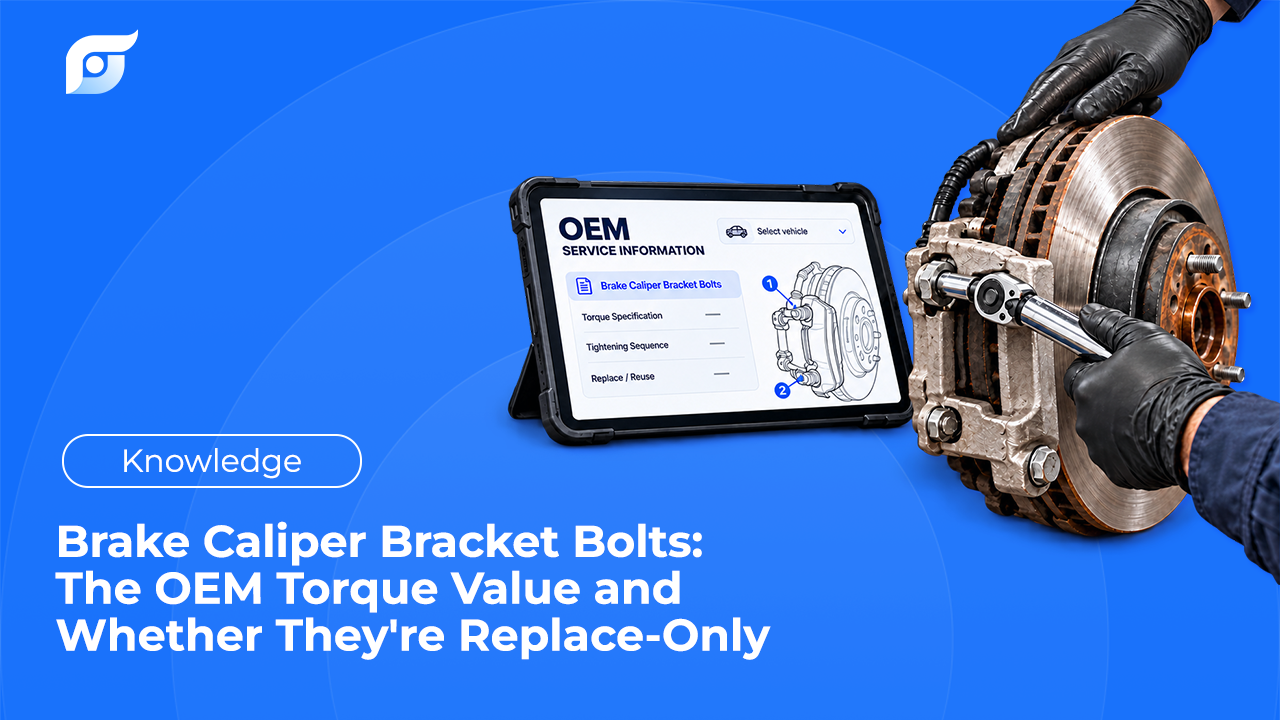
Two questions come up on every brake job once the bracket is off: what’s the torque, and can these bolts go back in. Both answers are vehicle-specific, and the published charts that claim otherwise are the reason techs end up arguing about it on forums. This page covers what the torque value depends on, how to tell whether your bolts are one-time-use, and what a manufacturer’s own recall filing says happens when these particular fasteners are left under-torqued.
Quick Answer: There is no single caliper bracket bolt torque value — it is set per vehicle, and published figures across makes and models run from roughly 70 lb-ft to well over 130 lb-ft, with some specs written as torque plus an angle. Whether the bolts are replace-only is also vehicle-specific. Treat any bolt with a torque-plus-angle spec as single-use, and check the service information for explicit “replace after removal” language and the parts diagram for one-time-use markings. The stakes are documented: in NHTSA recall 25V-191, Chrysler reported that 2025 Pacifica PHEVs built with front caliper bracket bolts “not properly torqued may become separated from the steering knuckle,” producing “reduced steering control, brake fluid leakage, diminished front braking performance.” Under “warning that can occur,” the filing says None. The remedy replaces the bolts rather than re-torquing them. Pull the spec for your exact year, model, and brake package before the bracket comes off.
Why There Isn’t One Number
The bracket (also called the anchor plate or carrier) is what ties the caliper to the steering knuckle, so its bolts are sized to the knuckle, the brake package, and the vehicle’s weight. Chrysler’s recall filing lists the fastener for that application as a hex flange head bolt, M14 x 1.50 x 40.00. A compact car’s bracket bolt may be M10 or M12. Those are different fasteners with different clamp loads and different specs.
Three further variables change the number even on one vehicle:
- Front versus rear. Many vehicles use different bracket bolts and different specs at each axle.
- Brake package. A heavy-duty or towing package can carry a different caliper and bracket than the base build on the same model year.
- Thread condition. Specs assume clean, dry threads unless the procedure says otherwise. Where thread locker is specified, it is part of the spec, not an optional extra, and applying it when the spec assumes dry threads changes the tension a given setting produces.
This is why a consolidated chart is the wrong source for this fastener and the manufacturer’s own specification is the right one. It is also why forum answers for “the same car” conflict so often: the posters usually do have the right number, for their build.
How to Tell If the Bolts Are Replace-Only
Four indicators, in order of reliability:
- The spec is written as torque plus an angle. A value such as “100 N·m plus 90°” describes a torque-to-yield fastener: it is tightened past its elastic limit by design and does not return to its original length. Treat torque-plus-angle bolts as single-use unless the manufacturer explicitly says otherwise.
- The procedure says so. Service information uses language like “replace after removal” or “always renew.” That sentence is the answer, and it outranks any general rule.
- The parts diagram flags it. Some manufacturers mark one-time-use hardware on the illustration, so the parts view answers the question before the torque table does.
- The remedy for a related recall replaces them. In 25V-191, Chrysler’s stated remedy was to “inspect and, if necessary, replace the front brake caliper brackets, and replace the front brake caliper bracket bolts and torque to the proper specification.” When a manufacturer fixes its own under-torque problem by fitting new bolts rather than re-torquing the originals, that tells you how it views reuse on that application.
Where the service information is silent, the conservative call is new bolts. They are inexpensive relative to the consequence, and nobody has ever had a comeback caused by installing fresh hardware.
What the Failure Actually Looks Like
Chrysler’s Part 573 filing for 25V-191 is worth reading because it states the consequence in plain regulatory language. The defect description: vehicles “built with front brake caliper bracket bolts not properly torqued may become separated from the steering knuckle.” The safety risk: “A brake caliper bracket that separates from the steering knuckle can result in reduced steering control, brake fluid leakage, diminished front braking performance.”
The line that matters most for a working tech is the one under warnings. Asked what warning the driver would get, the filing answers: None.
That is the argument for using a torque wrench on this fastener rather than an impact and judgment. An under-torqued bracket bolt does not announce itself with a noise, a pull, or a dash light. It announces itself when the bracket moves.
Don’t Confuse Bracket Bolts With Guide Pin Bolts
Two different fasteners get called “caliper bolts,” and mixing up their specs is a common error:
| Fastener | What it holds | Typical relationship |
|---|---|---|
| Bracket / anchor bolts | Bracket to steering knuckle or axle flange | The larger fastener, substantially higher torque, more often one-time-use |
| Guide pin / slide bolts | Caliper body to the bracket | Much lower torque, often reusable, frequently paired with specific lubrication of the pin |
The values are far enough apart that applying one to the other is not a near miss. Applying guide-pin torque to a bracket bolt leaves the bracket badly under-clamped, which is the failure mode Chrysler’s filing describes.
If the Vehicle Has an Open Recall
Brake hardware shows up in safety campaigns regularly. If the vehicle in front of you is covered by an open recall, that repair is performed free of charge by an authorized dealer, regardless of the vehicle’s age or mileage. Recall status is VIN-specific, so check the 17-character VIN at nhtsa.gov/recalls before quoting any work that a campaign may already cover.
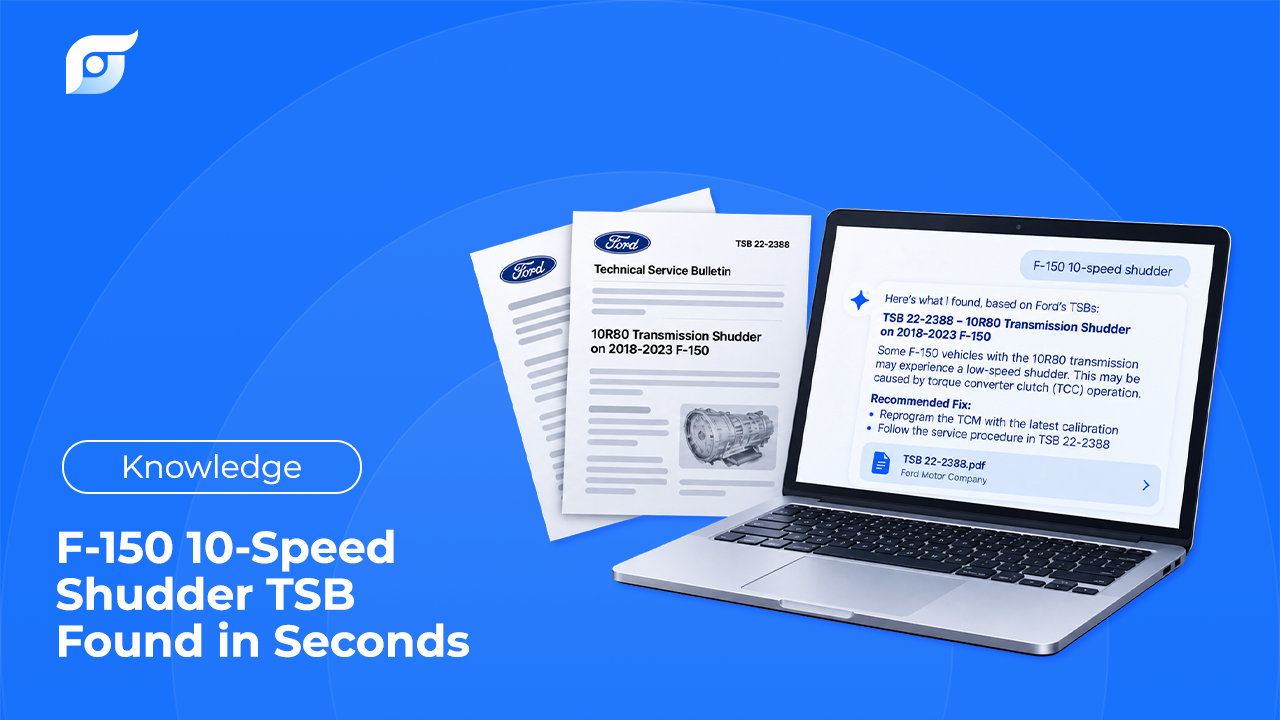
Recall and bulletin are not the same thing, and the difference decides who pays — the distinction is covered in TSB vs. recall. On the estimate side, brake work quoted from OEM labor times should also account for new hardware when the procedure calls for it, rather than treating bolts as shop supplies.
Getting the Spec for the Vehicle in Front of You
- Identify the build. VIN, including engine and brake package, since the same model year can carry more than one.
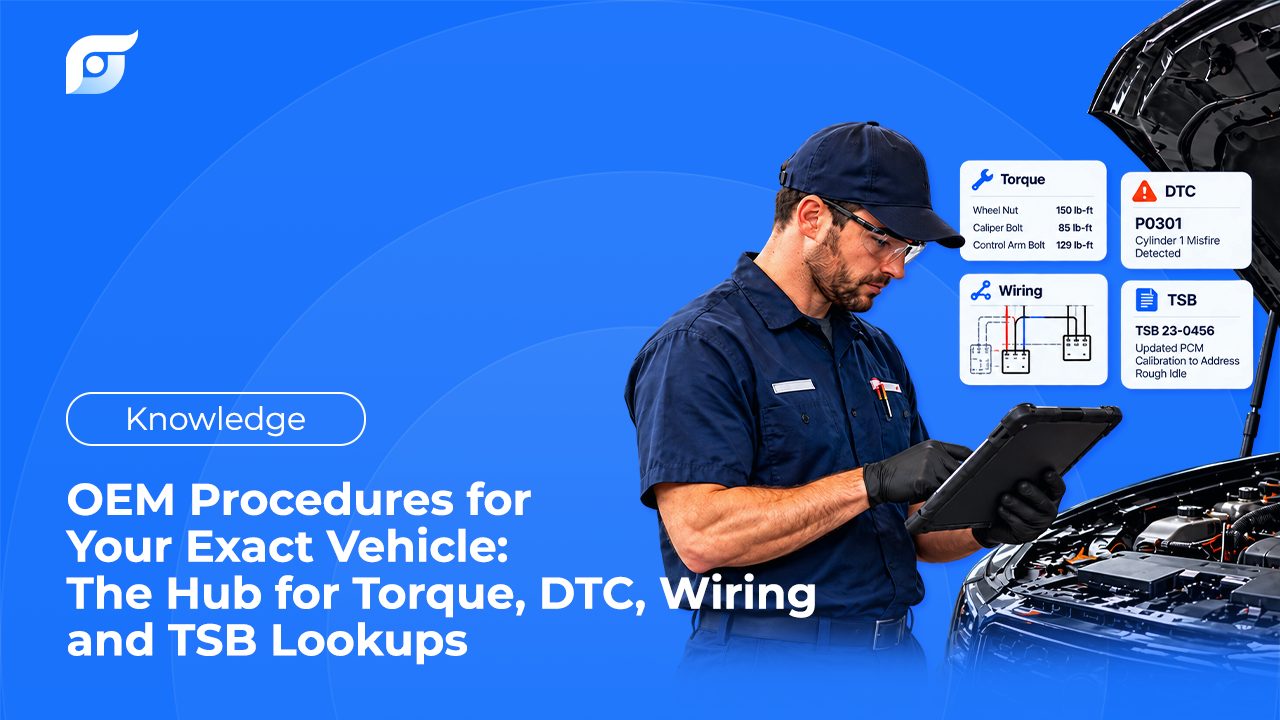
- Pull the specification, not a chart. You want the manufacturer’s torque table or the brake procedure for that vehicle.
- Read what comes with the number. Dry or lubricated threads, thread locker, tightening sequence, and whether an angle follows the initial torque.
- Check the replace-only status in the same document, and order hardware before disassembly if it’s required.
- Confirm the component. If you’re unsure whether the fastener in your hand is a bracket bolt or a guide pin bolt on this design, the component location view settles it faster than a parts-store listing.
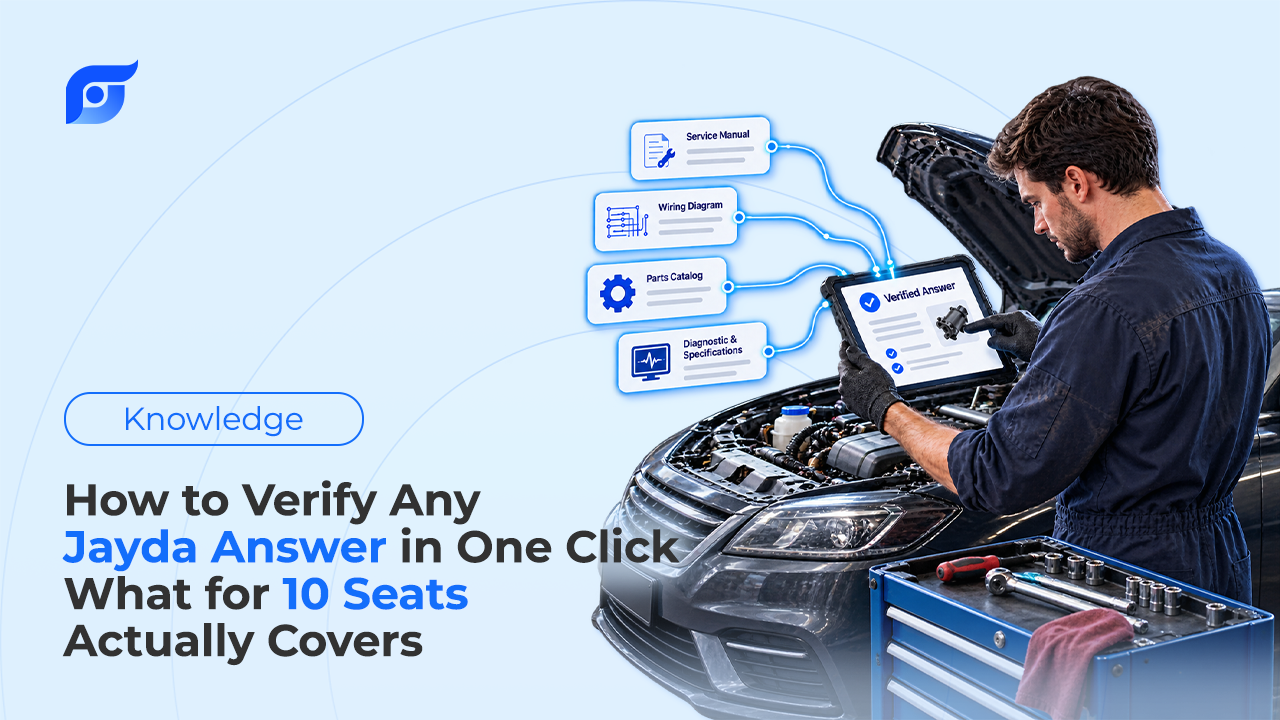
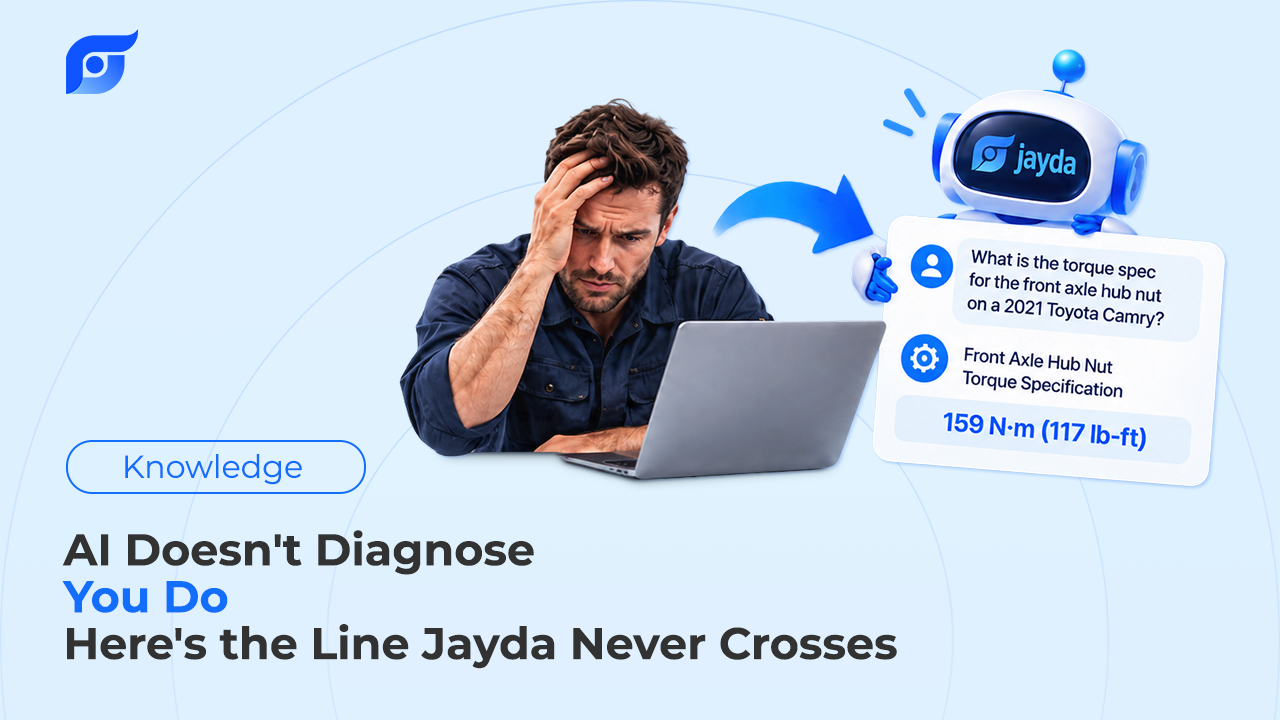
That sequence is a lookup, not a judgment call. With Jayda, a tech asks for what they need on the exact vehicle and gets the matching OEM document with its source shown, and when the document isn’t in the database Jayda says so rather than offering the closest value it can find. On a brake fastener, that boundary matters more than anywhere else, which is the reasoning behind never generating repair procedures and retrieving manufacturer documents instead of writing answers about them. A generated torque value for a brake bracket is exactly the kind of confident number that should never reach a wrench.
This page describes how to find and read the specification; it does not publish one, because a value that is right for one build is wrong for the next. For the broader question of where repair information should come from, see OEM procedures versus aftermarket guides and how to choose OEM repair software.