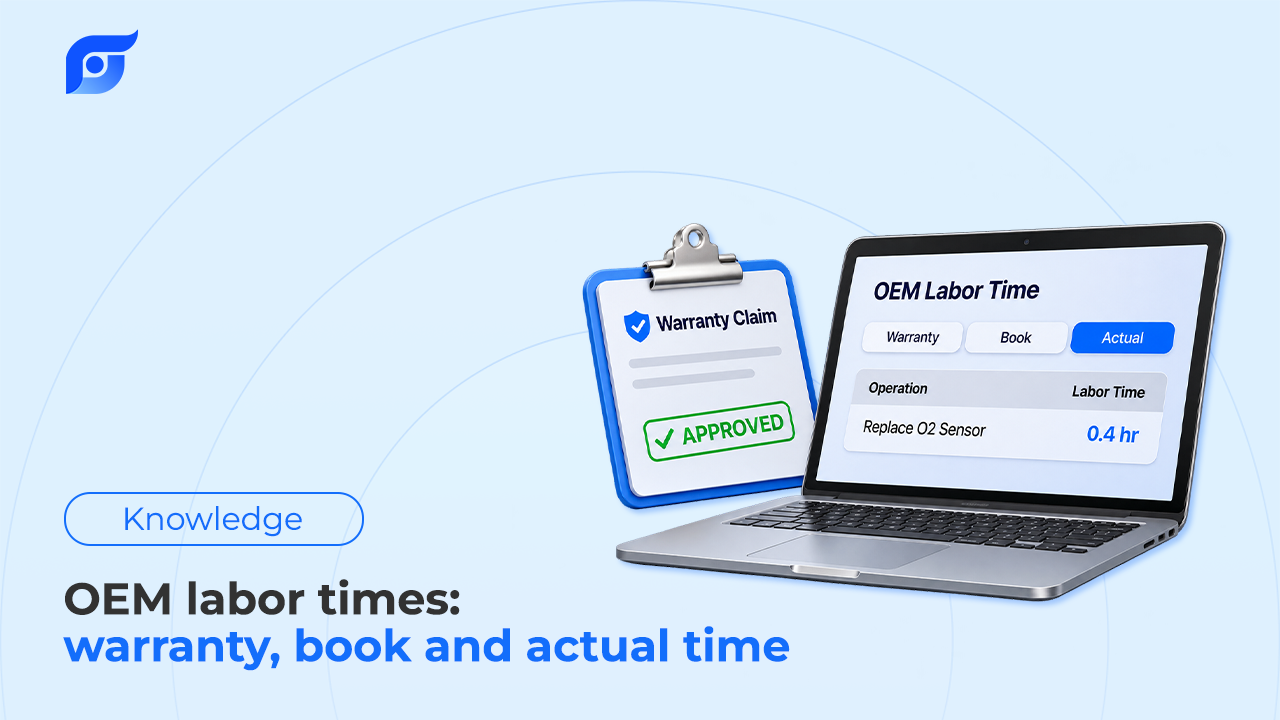
Three different clocks run on every repair, and they rarely agree. Warranty time is what a manufacturer will pay a dealer for a covered job, book time is the published estimate a shop quotes a customer, and actual time is what the technician logged on the job. Mixing them up is how estimates drift, efficiency numbers lie, and techs end up arguing with a service counter over hours that were never defined the same way.
Quick Answer: Warranty time is set by the manufacturer and used to reimburse dealers for warranty repairs; the OEM decides how many hours it will pay, and that figure is usually lower than the customer-pay number. Book time (also called flat-rate or standard time) is a published estimate from a labor guide such as OEM, ALLDATA, Mitchell 1, or MOTOR, used to price customer-pay work. Actual time is the clock time a technician spends on the job. Shop efficiency is book hours billed divided by actual hours worked, so a job billed at 2.0 hours and finished in 1.6 hours runs at 125%. The three numbers answer three different questions, and none of them is a substitute for another.
What Is OEM Warranty Time?
Warranty time is the number of hours a vehicle manufacturer allows a dealer to claim for a specific repair under factory warranty, recall, or goodwill coverage. It lives in the OEM’s own labor-operation system: each repair has an operation code, and each code carries an allowable time.
The reimbursement math is simple. A manufacturer’s warranty manual, such as Maserati’s, describes labor credit as the dealer’s warranty labor rate multiplied by the approved labor operation time. Two inputs decide the payout: the rate, and the hours. The OEM controls the hours.
Dealer management systems pull those operation codes and allowable hours directly into the repair order. Honda, for example, publishes its Flat Rate Manual with monthly updates for both Honda and Acura VINs so dealers can look up operation codes and allowable times for warranty work.
Warranty time and the dollar rate are separate numbers. A labor time guide sets how long a job is allowed to take, not what an hour costs. That distinction matters when a dealer disputes a reimbursement: states with franchise laws typically require manufacturers to file warranty reimbursement schedules that are reasonable with respect to the time and compensation allowed, and the argument is often about the rate, not the hours.
Why Warranty Time Is Usually Tighter Than Customer-Pay Time
Warranty time reflects what a manufacturer is willing to pay, which is not the same as what a repair costs a shop in the field. Truist’s commentary on OEM warranty reimbursement notes that the time an OEM allows for a warranty repair is usually less than the time a customer-pay job would be quoted for the same work.
GM states the boundary plainly on its technician site: third-party labor manuals such as ALLDATA and Motor are intended for estimating and are not a substitute for GM warranty labor times, partly because third-party times can include additional allowances, add-times, and markups. The reverse also holds. A warranty time is not an estimate to hand a customer for a paid repair.
What Is Book Time?
Book time is a standardized estimate of how long a repair should take, published in a labor guide and used to price customer-pay work. It goes by several names depending on who is talking: flat-rate time, standard time, labor guide time, or simply “the book.”
For customer-pay work, dealers typically use industry-standard third-party time guides rather than the OEM’s own warranty times. Independent shops do the same. That makes book time the number most customers see on an estimate, and the one a shop’s margin depends on. It is also why OEM labor times sit at the center of accurate quoting: a documented standard behind the number is the difference between a defensible estimate and an argument at the counter.
Do Different Labor Guides Give the Same Time?
No. Different labor guides frequently publish different times for the same job, and the reasons are documented.
Mitchell 1 states that it builds times by researching procedures and other available information, and in some cases consulting other sources for input. It also states that OEM warranty times are valuable to it because they identify which components and repairs it needs to cover on new vehicles. Those inputs are not identical to what ALLDATA or MOTOR uses, so the outputs differ.
Publication timing matters too. ALLDATA states that it updates its OEM database daily from manufacturer documents, but acknowledges delays can occur between the OEM publishing a change and that change appearing in ALLDATA. A 2019 case reported by Repairer Driven News shows how large the gap can get: Audatex listed a Lexus steering gear assembly at 8.9 hours where it had previously carried 2.5 hours, and ALLDATA’s position was that the current Lexus procedure had been updated to no longer require engine removal. A time can be wrong in either direction simply because the procedure underneath it changed. Which source was right depends on which procedure revision applied, and a reader should verify that against the OEM procedure itself, since sources describing these disputes are mostly trade reporting and vendor pages, not primary documents.
That is the practical reason to check a labor time against OEM repair information: the time and the procedure should come from the same revision. For a broader look at the trade-off, see how OEM repair procedures compare with aftermarket repair guides.
What Book Time Usually Leaves Out
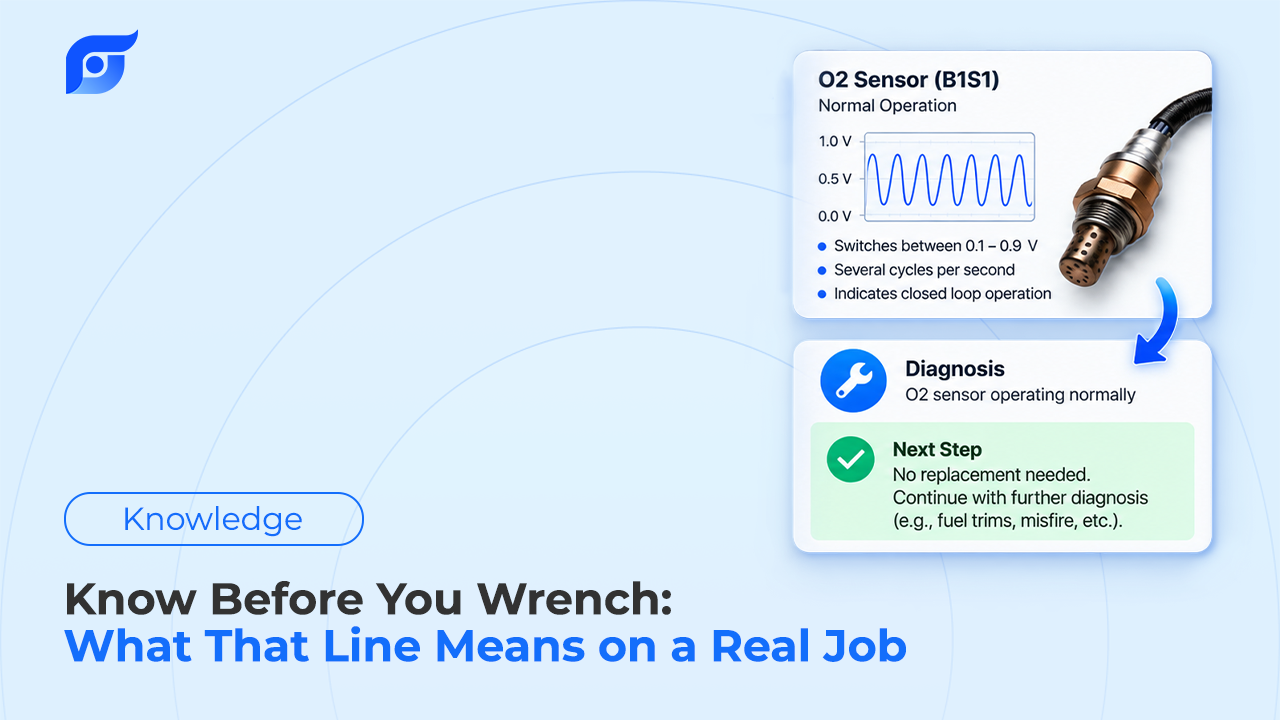
Most labor guides do not include pre-repair diagnostic time in their flat-rate estimates. A quote built from book time alone covers the repair operation, so diagnosis is a separate line, and a technician who hunts a fault for an hour before the book-time job even starts has already spent clock time that no guide credited.
What Is Actual Time?
Actual time, also called clock time, is the hours a technician spends working on a job, measured from when they start to when they stop. It is the only one of the three numbers that measures the real world, and it is the only one that no manual can supply in advance.
Actual time answers questions book time cannot: how long this shop’s technicians take on this job with this equipment, where time is lost to searching for information, and how much of a paid day was spent on work that billed. Searching, in particular, is a measurable drain, and it shows up in actual time while staying invisible in book time. For more on that cost, see the hidden cost of searching before every repair order and why technicians waste time looking for repair information.
How Do Book Time and Actual Time Create an Efficiency Number?
Technician efficiency is book (flat-rate) hours produced divided by actual hours worked. The formula is consistent across shop-management sources, though related terms such as productivity and proficiency are defined inconsistently, so confirm the definition your software uses before comparing numbers between shops.
An illustrative example: a technician bills 45 book hours over 40 clock hours. That is 45 ÷ 40 = 112.5% efficiency. A technician who bills 36 book hours over the same 40 clock hours runs at 90%.
Efficiency only reads correctly when the book time is trustworthy. A job billed at 2.5 hours and finished in 1 hour logs 250% efficiency for that line, which says more about the quoted time than about the technician. Benchmarks vary by source: one cites an industry average of 80–99%, while a dealer-focused resource puts target efficiency at 125% when using a factory manual and 135% when using a non-factory manual. Those two figures are not directly comparable, because they measure different bases.
Flat Rate Is Also a Pay Method
“Flat rate” refers to two different things, and conflating them causes confusion. One is a labor guide: the published times used to estimate a job. The other is a pay plan: a technician is paid per book hour produced rather than per clock hour. A shop can quote from book time while paying technicians hourly, and a dealer can pay flat rate against OEM times while quoting customers from a third-party guide. The guide and the pay plan are independent decisions.
Which Time Applies to Which Situation?
| Situation | Time that applies | Who sets it |
|---|---|---|
| Dealer repair covered by factory warranty or recall | Warranty time | The manufacturer |
| Customer-pay estimate at a dealer | Book time from a third-party guide | The guide publisher |
| Customer-pay estimate at an independent shop | Book time | The guide publisher |
| Measuring technician efficiency | Book time ÷ actual time | The shop’s own records |
| Diagnosis before the repair | Typically outside book time | Shop policy |
Does an Independent Shop Repair Void the Warranty?
Under the Magnuson-Moss Warranty Act, a manufacturer generally cannot void a warranty or deny coverage solely because a third party performed maintenance or repair, or because another company’s part was used. The FTC restated this position in a 2022 consumer alert after settlements with three companies that were required to revise warranty language to say that using an unaffiliated repair shop will not void the warranty.
The protection has a boundary. The Act does not apply where the manufacturer provides the service or part for free, so a warranty can require use of the manufacturer’s network for covered free repairs. That is the situation where warranty time applies at all: warranty labor is performed and reimbursed through the dealer channel. Warranty terms differ by manufacturer and by vehicle, and this article is informational, not legal advice, so the specific warranty booklet is the document to verify against.
How Do Recalls and TSBs Fit Into Warranty Time?
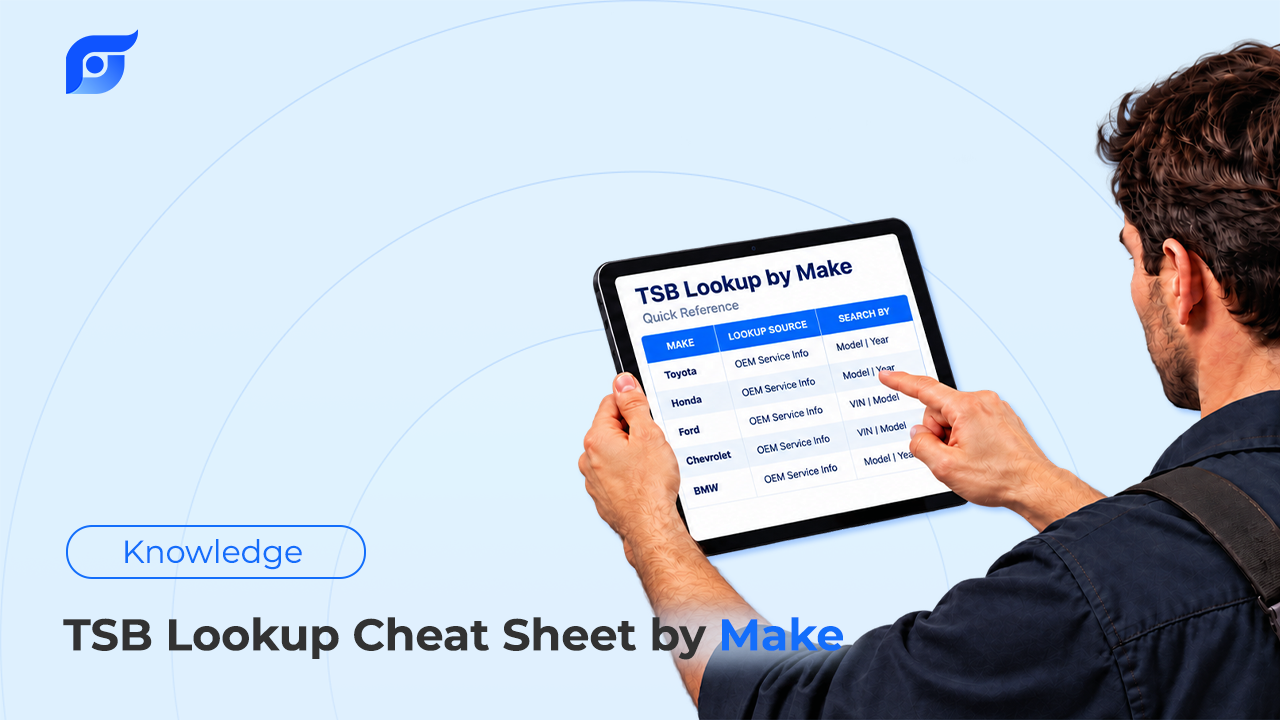
A recall is a mandatory safety remedy performed free of charge, and it carries its own OEM-defined labor operation. A technical service bulletin is technician guidance that may or may not be covered by warranty. Treating the two as the same thing overstates what a reader or customer can expect. For the distinction, see TSB vs. recall and what a TSB is. VIN-specific recall status is confirmed at nhtsa.gov/recalls.
How Should a Shop Choose and Verify a Labor Time Source?
Three checks keep the numbers honest:
- Confirm which revision. A time published against an older procedure revision can be wrong by hours, as the Lexus steering gear dispute showed. Check the procedure revision alongside the time.
- Know what the time includes. Diagnostic time, add-times, and additional allowances differ between guides. A time that includes redundant allowances and one that does not are not the same quantity.
- Keep actual time on the record. Efficiency, comeback analysis, and quote accuracy all depend on logged clock time, not just billed hours.
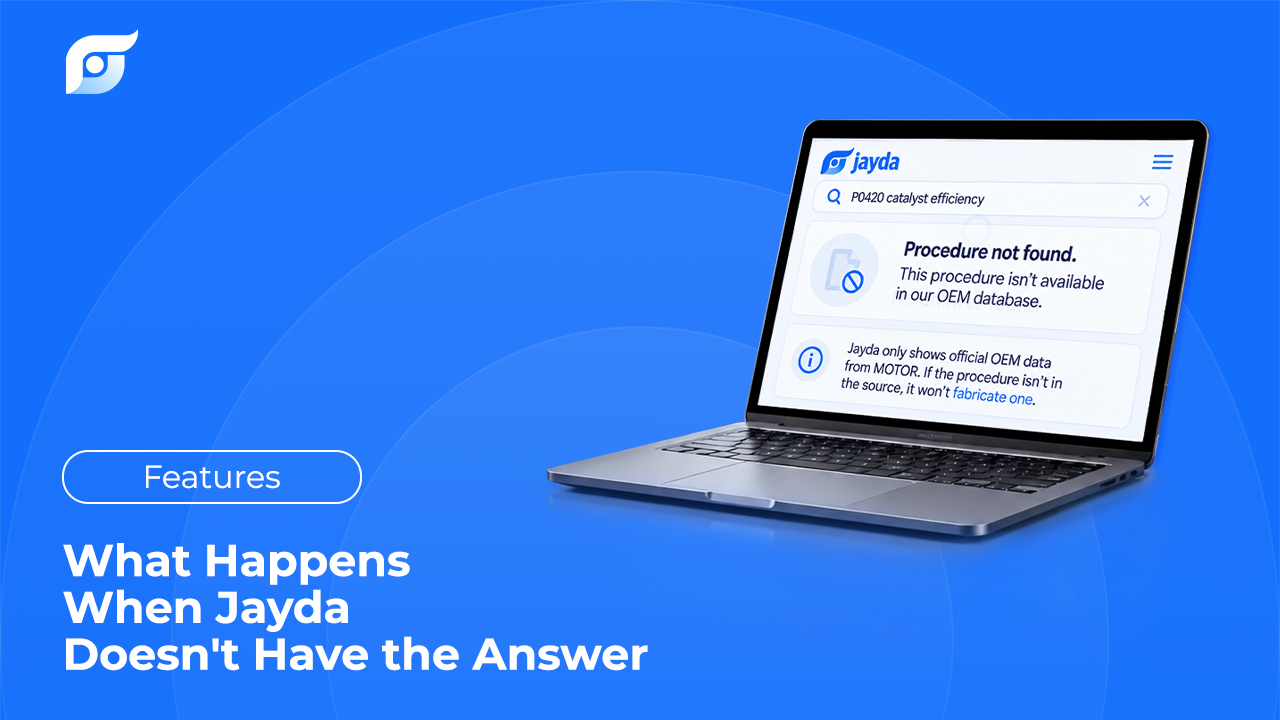
For the evaluation criteria behind choosing a source, see how to choose OEM repair software and the best OEM repair software for auto repair shops. Jayda’s approach to data is to search official OEM repair information rather than generate it, which is covered in why AI should search repair information, not generate it.
Frequently Asked Questions
Is warranty time the same as book time?
No. Warranty time is the OEM-approved time used to reimburse dealers for covered repairs, and it is usually lower than the customer-pay book time for the same job. Book time is a published estimate from a labor guide used to price paid work.
Is flat-rate time the same as book time?
Flat-rate time and book time describe the same published estimate. “Flat rate” can also describe how a technician is paid, which is a separate matter from the guide.
Why is a technician’s actual time often different from book time?
Book time is a standardized estimate that does not account for the hours a particular technician spends, and it typically excludes diagnosis. Actual time reflects the specific vehicle condition, tooling, information access, and technician experience.
How is technician efficiency calculated?
Technician efficiency equals book hours produced divided by actual hours worked, expressed as a percentage. A result above 100% means more book hours were billed than clock hours were spent.