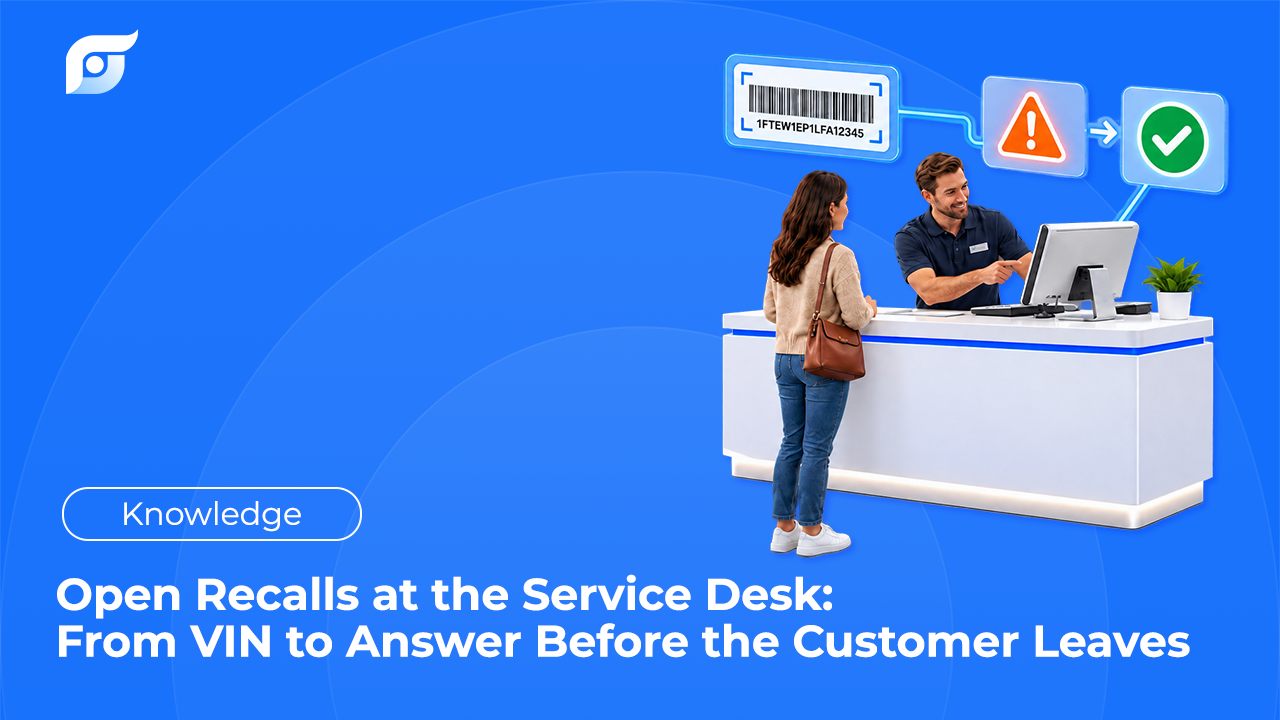
A recall check belongs at the write-up, not after the repair. It takes a VIN and a free federal lookup, and it changes three things at once: what the customer owes, where part of the work gets done, and what your shop should put on the ticket. This is the desk procedure, including the awkward cases where the recall exists but the lookup doesn’t show it yet, or the manufacturer hasn’t built the fix.
Quick Answer: If a vehicle has an open safety recall, the repair is performed free of charge by an authorized dealer for that brand, regardless of the vehicle’s age or mileage and regardless of warranty status. Check the 17-character VIN at nhtsa.gov/recalls while the customer is at the counter: the search returns open, unrepaired recalls and does not list campaigns already completed. Independent shops don’t perform OEM recall repairs and shouldn’t quote work a campaign covers; the right move is to tell the customer plainly, note it on the repair order, and continue with the work they came for. Three cases need different wording: a recall with no remedy yet (manufacturers may attach a “Park Outside” or “Do Not Drive” advisory while they develop the fix), a recall filed but not yet VIN-searchable (Hyundai’s recall 26V664, filed 8 October 2026, lists 13 October 2026 as the date the VIN becomes searchable), and an older vehicle, where the manufacturer’s statutory obligation to remedy free of charge is generally limited to vehicles first sold within the previous 15 years.
The 60-Second Desk Procedure
- Capture the full 17-character VIN at write-up, not the plate or the customer’s description of the car.
- Run it at nhtsa.gov/recalls. The lookup is free, needs no account, and returns open safety recalls for that specific vehicle.
- Read what came back. Note the NHTSA campaign number, the manufacturer’s own recall number if shown, the component, and whether a consumer advisory is attached.
- Tell the customer before the estimate. Plain wording: this vehicle has an open safety recall on [component], the manufacturer pays for that repair at a [brand] dealer, and here’s the campaign number to give them.
- Write it on the repair order. Campaign number, date checked, and what the customer said they’d do. That line protects everyone later.
- Quote your own work separately. Never price or perform the repair a campaign covers.
Done at write-up, this costs a minute. Done after the customer has paid for something the manufacturer would have covered, it costs the relationship.
What the VIN Lookup Does and Doesn’t Show
The NHTSA VIN search is the right tool for a specific vehicle, and it has limits worth knowing before you rely on it at the counter:
- It shows open, incomplete recalls. A campaign that a previous owner already had performed won’t appear, which is the correct behavior but can surprise a customer who read about a recall online.
- It covers safety recalls, not every campaign. Manufacturer customer-satisfaction programs, extended warranties, and service campaigns aren’t safety recalls and generally aren’t in the federal lookup, even though they can pay for repairs. Those live in the manufacturer’s own system.
- There’s a lag between filing and searchability. Part 573 reports carry a field for exactly this. In Hyundai’s recall 26V664, submitted 8 October 2026 for 2015–2016 Genesis and 2017–2020 Genesis G80 vehicles, the filing lists the date the VIN becomes searchable as 13 October 2026, with dealer notification planned for December. For several days, the recall exists and the lookup can’t confirm it on a specific car.
- Bulletins are a separate search. TSBs aren’t recalls, aren’t free, and are searched by year, make, and model rather than VIN — the distinction covered in TSB vs. recall.
When the Fix Doesn’t Exist Yet
A manufacturer must notify when it determines a defect exists, which sometimes happens before the remedy is finished. The customer-facing result is a campaign you can see but can’t schedule.
Hyundai’s 26V664 is a current example. The defect involves a power seat switch that may remain engaged and run the seat motor continuously, which the filing says “may result in overheating, thereby increasing the risk of a vehicle fire while driving or parked.” The remedy section states plainly that Hyundai “is currently working on a remedy for this defect condition,” and the consumer advisory attached to the campaign is Park Outside. The filing also records the warnings an owner might notice first: a burning odor from the seat, or an inoperative seat switch.
Two things to carry to the desk from that. First, the advisory is the actionable part while the remedy is pending — if a campaign says park outside, the customer needs to hear it in those words, today. Second, the no-cost promise doesn’t depend on warranty: the same filing says the remedy will be offered “at no cost to owners for all affected vehicles, regardless of whether the affected vehicles are still covered under” the new vehicle limited warranty, and that owners may be reimbursed for out-of-pocket costs already incurred under the manufacturer’s reimbursement plan.
Older Vehicles and the Limits of “Free”
The free-remedy obligation is not unlimited. Under federal law, a manufacturer’s duty to remedy without charge is generally tied to vehicles first sold within the previous 15 years, with a shorter window for tires. Beyond that, manufacturers sometimes still perform the repair as a matter of policy, and some campaigns are extended, but it stops being an entitlement.
At the desk, that means the honest phrasing is “the manufacturer covers this” for a recent vehicle, and “ask the dealer whether this campaign is still being covered on a vehicle this old” for an older one. Point the customer at the dealer for the answer rather than making a coverage promise your shop can’t keep. This page describes how the process generally works and isn’t legal advice; the manufacturer and NHTSA are the authorities on any specific campaign.
What to Say, Without Over-Promising
| Situation | What to tell the customer |
|---|---|
| Open recall, remedy available | “Your VIN shows an open safety recall on [component], campaign [number]. That repair is done free by a [brand] dealer. We’ll handle the work you came in for.” |
| Open recall, remedy pending | “The manufacturer has announced the recall but hasn’t released the fix. The advisory on it says [park outside / do not drive]. The dealer will contact you by mail when the remedy is ready.” |
| Nothing found, but the customer saw news coverage | “Nothing open on this VIN today. Campaigns can take a few days to become searchable after they’re announced, so it’s worth re-checking, and the dealer can confirm by VIN.” |
| Recall related to the symptom they came in for | “The complaint you’re describing matches an open campaign. I’d have the dealer do that one before we go further, because it’s covered.” |
Notice what none of those say: no diagnosis of the customer’s safety situation, no promise about what a dealer will agree to, and no estimate for recall-covered work.
Why This Belongs in the Shop’s Process
Three practical reasons, beyond doing right by the customer.
It prevents billing collisions. Quoting a component that a campaign covers puts your shop in the position of charging for something the manufacturer pays for, and that conversation always lands on you. Checking first also keeps the estimate clean when OEM labor times are already tight on the job they actually booked.
It catches the symptom overlap. Some campaigns describe exactly the complaint on the ticket. The filing’s “warnings that can occur” field is written for owners, which makes it unusually useful for matching a customer’s description to a known defect.
It builds the kind of trust that returns. A customer who learns from your counter that a repair is free somewhere else remembers it. That’s a stronger retention play than any discount, and it costs you a VIN lookup.
Keeping Recall and Repair Information in One Workflow
The federal lookup answers “does this VIN have an open campaign.” The rest of the job still needs the manufacturer’s documents: the procedure, the specs, and whether a bulletin covers the complaint that isn’t a recall. Those two searches run in different places, and the discipline is to do both.
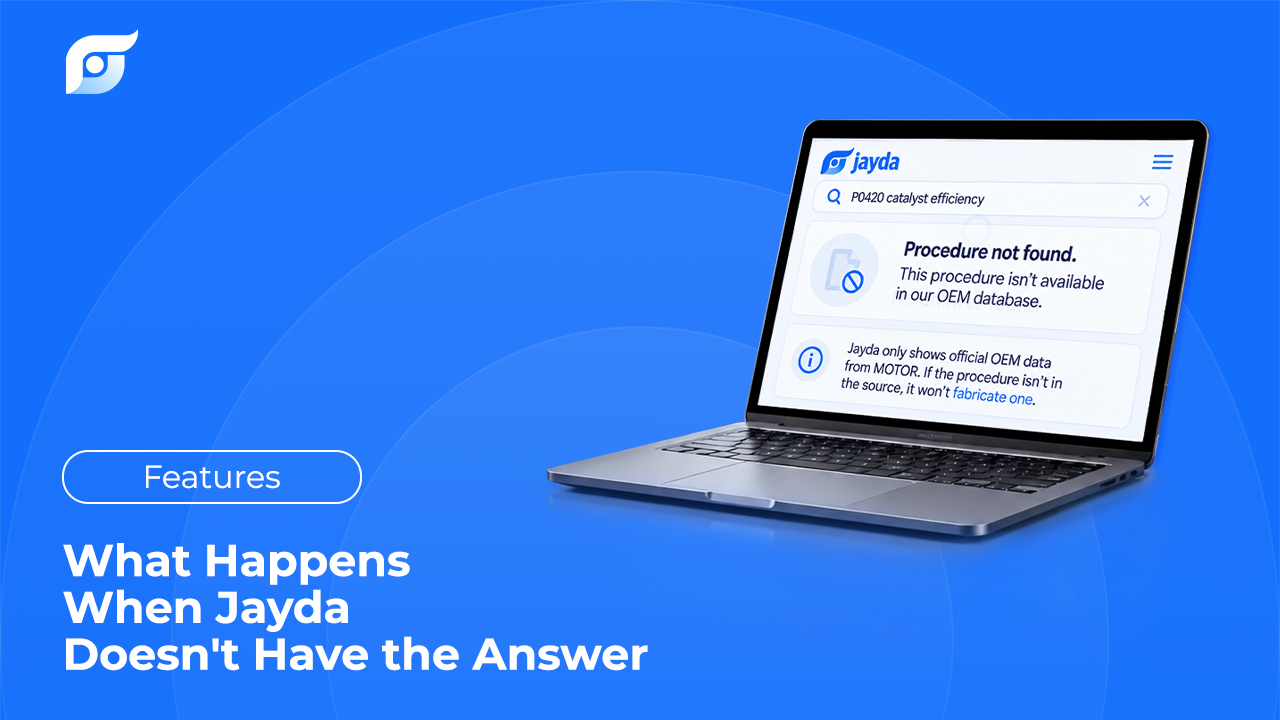
Jayda retrieves OEM repair information for the exact vehicle with the source shown, including manufacturer recall and bulletin documents in its MOTOR-licensed data set, and when something isn’t there it says so rather than approximating — the reasoning behind retrieving documents rather than generating answers and never writing a procedure that doesn’t exist. For the open-campaign question specifically, the VIN check still belongs at nhtsa.gov/recalls, because that’s the authoritative record of what’s open on that car today.
For the wider question of which repair information source to standardize on, see how to choose OEM repair software and OEM procedures versus aftermarket guides.