Every tech knows the moment. The quote was written from book time, the customer signed off, and forty minutes in, a caliper bracket bolt won’t move, or a previous shop’s thread repair is waiting behind a cover. The job just changed, and somebody has to decide what happens next. The shops that handle this well don’t improvise. They decided long before the bolt seized who gets called, when, and what gets written down.
Quick Answer: When a repair runs past the quote, the standard practice is to stop and get the customer’s authorization before doing the extra work, then record what changed and why. Labor guide times assume a vehicle in reasonable condition: Mitchell’s estimating guide lists time to free parts frozen by rust or corrosion and to deal with broken bolts among the items its times don’t include, and MOTOR advises shops to adjust estimates for local conditions such as rust-belt corrosion. Several states put the authorization rule into law. Florida prohibits charging more than the written estimate plus $10 or 10%, whichever is greater, up to $50, without the customer’s authorization, and requires the shop to notify the customer promptly so they can authorize, modify or cancel the work. California requires a written estimate before work begins and customer authorization before charges go above it. The practical rule: treat book time as the starting line, call before the clock runs over, and write down the reason, the new figure and who approved it.
Why Is Book Time a Starting Line?
A labor time is a documented standard for a defined procedure, and that’s what makes it useful. It gives the customer, the service writer and the tech the same number to start from. OEM labor times exist so that a quote isn’t built from memory.
But every labor guide is also explicit about what it doesn’t cover. MOTOR’s estimated work times cover the technician’s time on the physical procedure, and operations not listed as included are not part of the time unless a footnote says otherwise. Mitchell’s estimating guide lists time spent freeing parts frozen by rust or corrosion, and dealing with broken bolts, among its exclusions. MOTOR’s own usage guidance tells shops to adjust labor estimates for local conditions, and names rust-belt shops spending extra hours on corrosion as the obvious example.
That isn’t a flaw in the guide. A standard can’t know that this truck spent twelve winters on salted roads. The guide sets the line. The tech’s judgment on the actual vehicle decides whether the job is going to finish on it, and that judgment deserves the same respect as the number. The same logic sits behind knowing before you wrench.
The Usual Suspects
The reasons a job runs long are rarely mysterious. They tend to fall into three groups, and most of them can be spotted before the first bolt is turned.
Seized fasteners
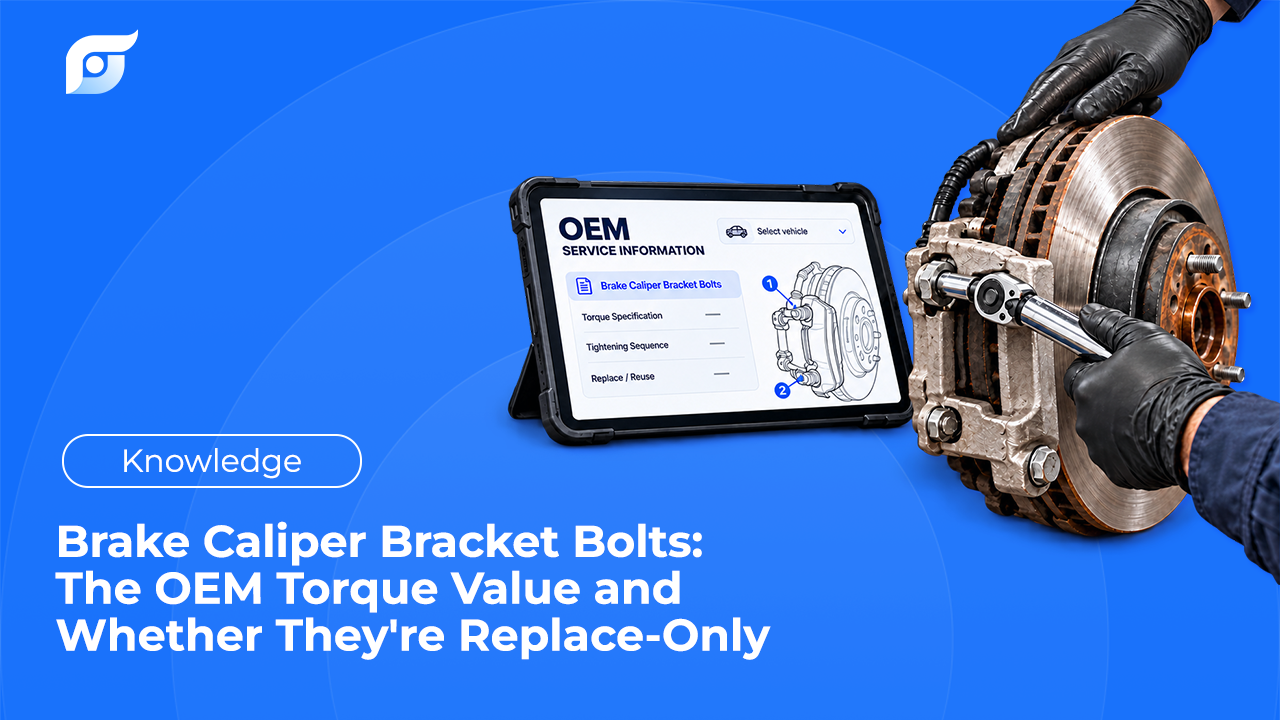
Suspension, exhaust and brake hardware are the usual offenders, because they live where water and road salt collect. A seized bolt is extra time with heat, penetrant and patience. A bolt that snaps is a different job: extraction, possibly a thread repair, and parts that weren’t on the quote. Some hardware was never meant to be reused anyway, as with caliper bracket bolts that the OEM may specify as replace-only. The replacement belongs on the quote from the start, not on the call.
Rust and corrosion
Rust adds time in ways a guide can’t model: brake lines that crumble when a fitting turns, brackets that need cleaning before a part will seat, heat shields that come off in pieces. On older vehicles from salt states, a walkaround with a light and a pry bar before quoting tells the service writer more than any number. Working on older vehicles with current OEM procedures covers the other half of that problem.
Prior repairs
The car has history the quote didn’t see: a stripped thread with a helicoil, a non-original part that doesn’t fit the way the procedure assumes, a harness repair with butt connectors where a connector should be. The OEM procedure describes the vehicle as built, which is exactly why the difference between an OEM procedure and an aftermarket guide matters when something doesn’t match. When the car in the bay isn’t the car in the procedure, the time changes.
Call First, Then Wrench
The single rule most shops agree on is the order of operations: when the job is going to run past the quote, the customer hears about it before the extra work is done, not after. Shop owners discussing this in trade forums split on many things, including whether to bill for rust at all, or whether to absorb it as part of the trade. They rarely split on this point. Extra time that the customer approved is a conversation. Extra time they find on the invoice is a dispute.
In some states this is also the law. Florida’s motor vehicle repair statute makes it unlawful to charge more than the written estimate plus $10 or 10%, whichever is greater, but not more than $50, unless the shop has the customer’s authorization. When the overage will exceed that, the customer must be promptly notified, by phone or other means, of the additional work and its estimated cost, and can authorize, modify or cancel the order. The same statute bars a shop from holding the vehicle because the customer refused to pay for charges above the estimate that weren’t authorized. California requires a written estimate before work starts and the customer’s authorization before charges go above it. The Bureau of Automotive Repair’s Write It Right guide sets out how that authorization has to be documented. Other states have their own versions, so the rule that applies is the one where the shop operates.
A good call is short and specific:
- What you found. “The rear caliper bracket bolt on the left side is seized and the threads in the knuckle are damaged.”
- What it means. The additional work, the parts it adds, and the revised total, not just “it’ll be more.”
- The options. Proceed, proceed with a limit, or stop and button it back up, including what stopping costs and whether the car is safe to drive.
Some shops build a second figure into rusty jobs up front: one price if everything comes apart, and a stated worst case if it doesn’t. It doesn’t replace the call, but it means the call confirms something the customer already heard instead of introducing it.
What to Write Down
The call protects the shop only if it’s recorded. Memory fades and service writers change shifts. A note on the repair order should capture enough that someone else could reconstruct the decision a month later:
- What changed: the condition found, in specific terms. “Seized” and “broken” are different findings.
- The revised work and total: the added operations, parts and new figure that were quoted.
- Who approved it: the customer’s name, how they were reached, and the date and time.
- What they chose: proceed, proceed with a limit, or stop.
A photo of the broken bolt or the rotted line belongs with the record too. It explains the charge better than any description, and it’s what the customer will want to see at pickup. Documentation is also what separates a job that ran long from a comeback argument later. That’s the same reason tying the work to a cited source pays off when a repair is questioned.
Setting the Rule Before the Next Job
The worst time to decide how the shop handles overruns is in the middle of one, with a tech waiting and a customer not answering the phone. The shops that handle this calmly settled a few questions ahead of time:
- The threshold. At what point does the tech stop and the service writer call? It can’t be looser than state law, and many shops set it tighter.
- Who makes the call. The tech flags it, and the service writer or owner calls. The tech shouldn’t have to negotiate from the bay.
- What happens if the customer can’t be reached. The car waits. Work beyond the authorization doesn’t start on an assumption.
- How breakage is handled. Some shops bill a fastener that breaks coming out but absorb one that breaks going back in, on the reasoning that the first is the car’s condition and the second is the shop’s. Whatever the policy is, it should be decided once and applied every time.
- Where the pre-quote inspection happens. A quick look for rust, prior repairs and non-original parts before the quote is written catches most surprises.
Write the rule down where every tech and service writer can see it. A shop with techs at different skill levels gets the most from it, because the same overrun gets the same call no matter who’s in the bay. And when a job does come back, a written rule and a written record mean nobody has to remember what was said. That’s the lesson behind the last time a job cost a shop a comeback.
Book time tells you where the job should finish. The car tells you where it will. The call in between, made before the wrench turns, is what keeps the customer’s trust when those two answers differ. Before the next rusty truck rolls in, it’s also worth checking where the components actually sit, so the quote reflects what’s in the way.
This page summarizes published labor guide notes, state statutes and regulator guidance, and is not legal advice. Rules on estimates and authorization differ by state and change over time, so confirm the current requirements where your shop operates.