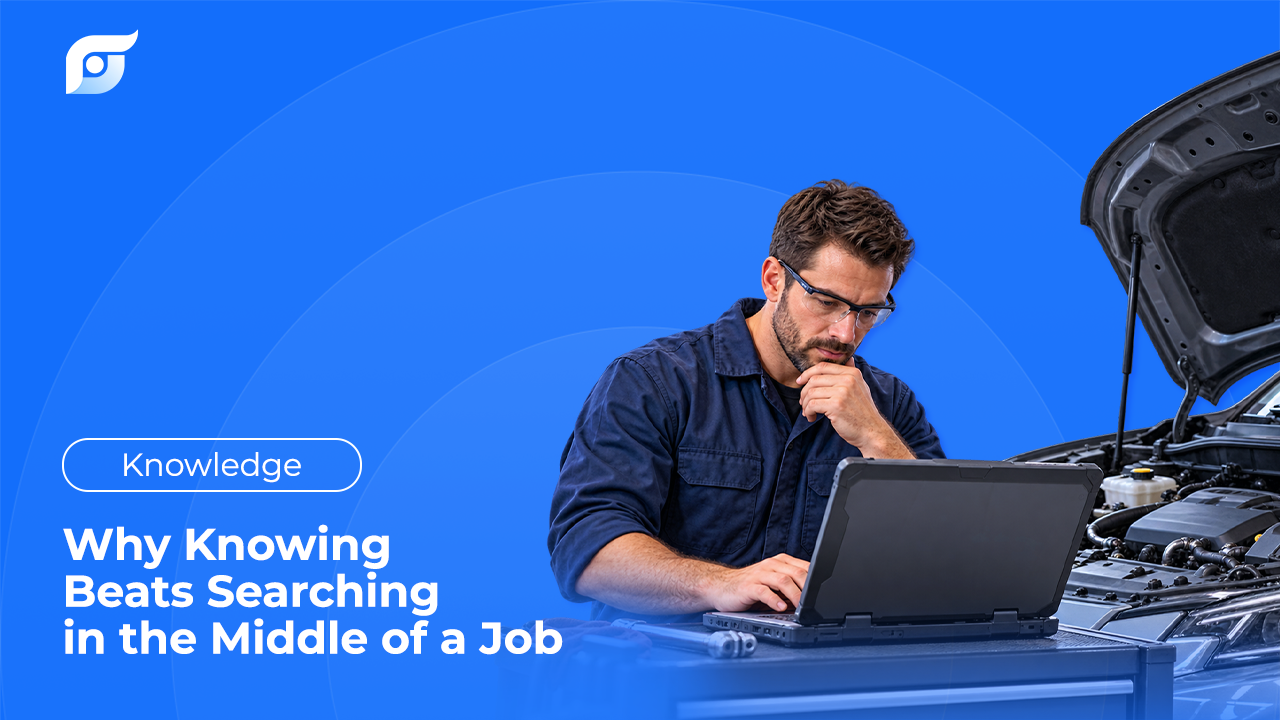
Mid-job, the question isn’t whether you can find something. You can always find something. The question is whether what you found is enough to put the wrench on it. Those are two different states, and only one of them has a test you can apply. Searching ends when a result looks close enough. Knowing ends when the document in front of you names your vehicle and you can see where it came from.
Quick Answer: Searching and knowing differ by their stopping rule. Herbert Simon’s model of satisficing describes how people search: options are evaluated one at a time against an aspiration level, and the search stops at the first option that clears it. Mid-repair, with the vehicle apart and the bay tied up, that aspiration level drops, so a result matching three of four criteria starts to look acceptable. Knowing uses a fixed test instead: the document names the exact vehicle (year, engine, submodel, and build date where the document is scoped that way), the source is visible, the conditions around the value are stated (clean and dry threads, sequence, preconditions), and you know what isn’t covered. That test costs the same whether the answer took one question or five menu levels. What changes is how tempted you are to skip it.
What Does “Searching” Actually End With?
Herbert Simon’s account of decision-making under limits has three parts: you look at options in sequence, you hold an aspiration level for what counts as good enough, and you stop at the first option that meets it. He called it satisficing, and it isn’t a flaw. It’s how anyone works when time and information are limited, which describes every repair order ever written.
The problem is what happens to the aspiration level mid-job. The car is on the lift, the panel is off, the next job is waiting, and the tech needs one number. Each additional click costs something now, so the bar for “good enough” falls. A forum post about the same model year, a chart that doesn’t say which engine, a value that someone’s memory produces: all of these clear a lowered bar.
Nothing in that process tells you the answer is wrong. That’s the trap. Searching returns candidates, and a candidate that matches most of your criteria feels like a match.
What Does “Knowing” Mean in Practice?
Knowing isn’t a feeling of confidence. It’s four conditions you can check once the manufacturer’s document is open:
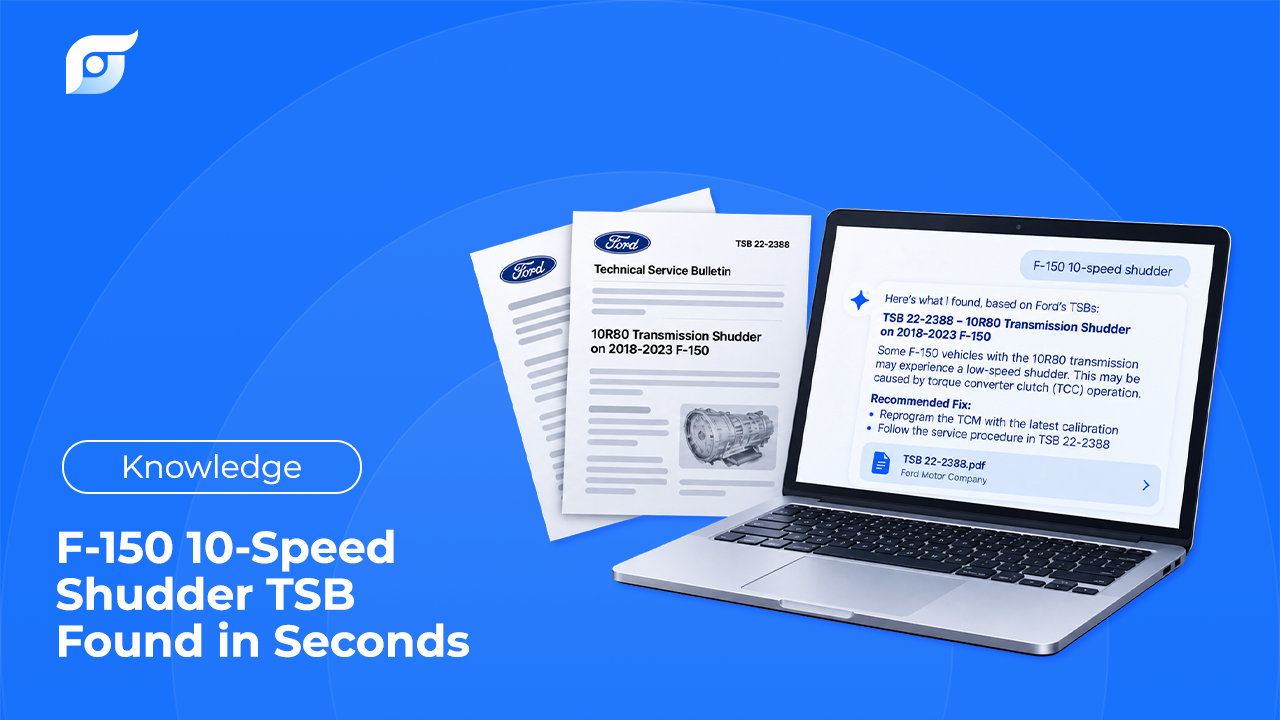
- The document names your vehicle. Not the model, the vehicle: year range, engine, submodel, and build date where the document is scoped that way. Ford’s 10R80 bulletin 20-2117 covers 2017–2018 F-150s built on or before 20 November 2017. “2018 F-150” alone doesn’t tell you whether you’re inside it.
- You can see the source. A document name, a manufacturer, a model year. If you can’t open what the answer came from, you have a claim, not a reference.
- The conditions are stated. A torque value normally assumes clean, dry threads and a specific sequence. A test spec may assume ignition on, engine at temperature, or another code addressed first. A number without its conditions is half an answer.
- You know what isn’t covered. If the procedure for your exact configuration doesn’t exist, that is information too, and it changes what you do next: ask a different question, check for a bulletin, or stop and get the right document rather than proceeding on a near match.
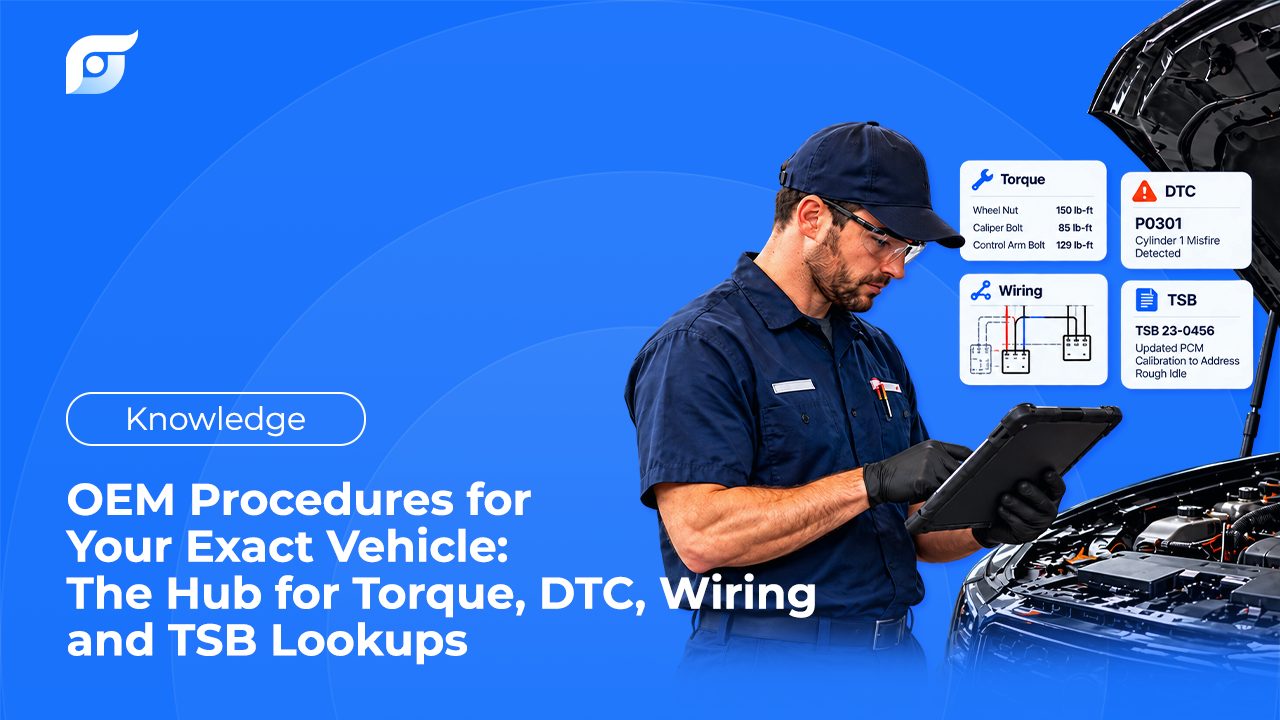
This is what OEM repair information gives you that a consolidated chart usually can’t, and it’s the practical line between an OEM procedure and an aftermarket guide.
Why Does Uncertainty Cost More Than Minutes?
Because the alternative to knowing isn’t waiting. It’s proceeding anyway. In the bay that shows up as the parts cannon: replacing the part named in the code without confirming it failed. The textbook version is a P0420 catalyst efficiency code answered with a converter, when the upstream oxygen sensor was feeding bad data. The code returns, the customer is out the money, and the diagnosis still hasn’t happened.
TechForce Foundation makes the same point to new technicians in its guidance on building diagnostic skill: think before you replace. Confirming what the manufacturer specifies for your exact vehicle is the cheap half of that discipline. Checking whether a technical service bulletin already documents the pattern is the other cheap half, and both happen before any part comes off the shelf.
Doesn’t Knowing Take Longer Than Searching?
The four checks above take moments when the manufacturer’s document is already open. They take forever when it isn’t, because then you’re not verifying, you’re reconstructing: comparing a forum reply against a chart against a half-remembered procedure, trying to triangulate a number none of them is accountable for.
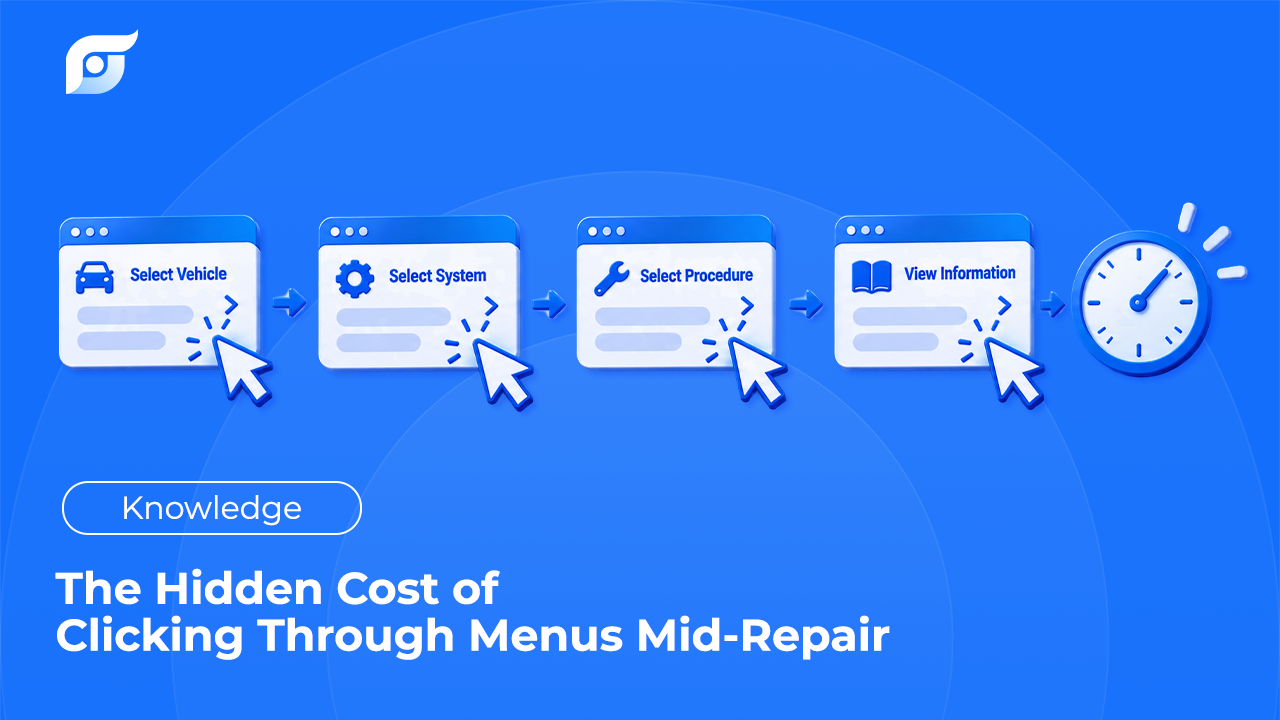
That’s why lookup method and lookup discipline aren’t separate issues. When reaching the document is slow, techs do fewer lookups and verify less. Where lookup time actually goes is navigation rather than reading, and the cost of searching before every repair order is the visible part of a bill that also includes the verifications nobody ran.
How the Lookup Model Changes the Stopping Rule
Ask a question for a specific vehicle and get back the manufacturer’s document with its source attached, and the stopping rule stops being a judgment call. You’ve either got the document for your vehicle or you haven’t, and you can see which.
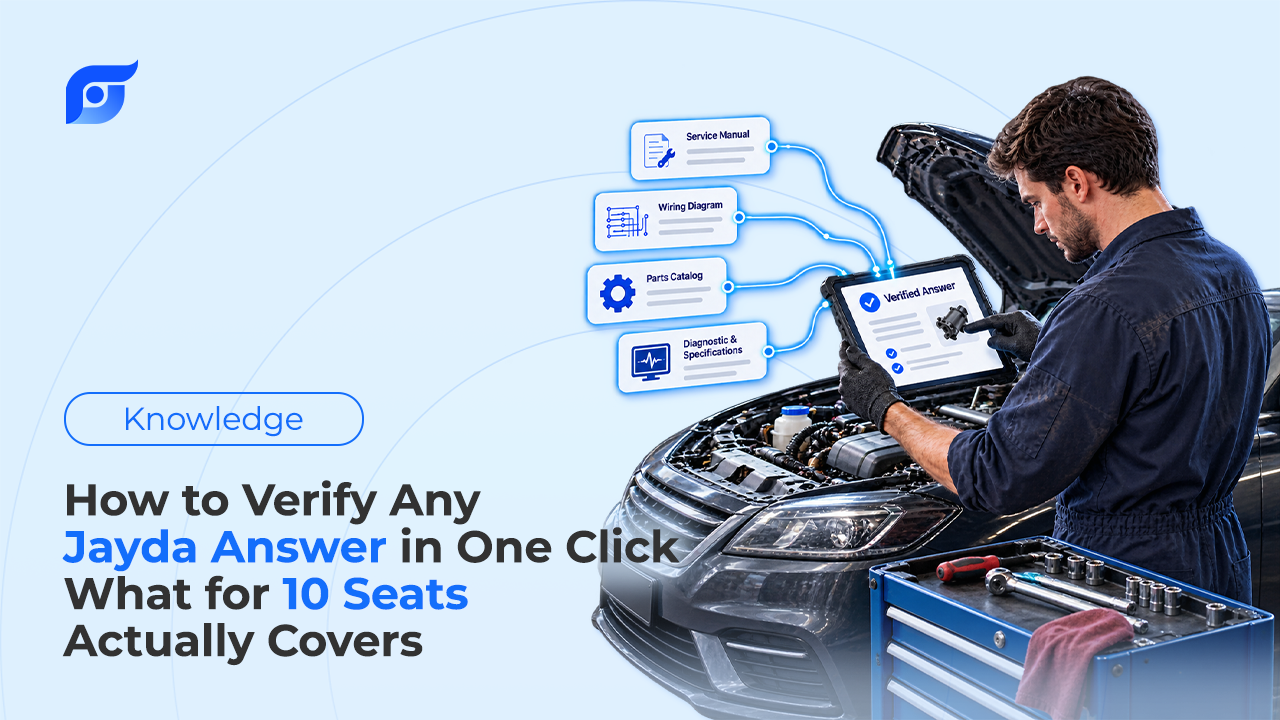
That’s the model Jayda is built on: the tech asks the way they’d ask another tech, Jayda retrieves the matching OEM document from MOTOR-licensed data and shows the source, and when nothing matches, it says so instead of offering the closest thing available. Its AI searches and retrieves rather than writing repair content, the reasoning in why AI should search repair information, not generate it. Coverage spans 43 manufacturers from 1985 to 2026, with Toyota, Lexus, and Scion data still pending, so confirming the vehicle is covered is part of the same habit.
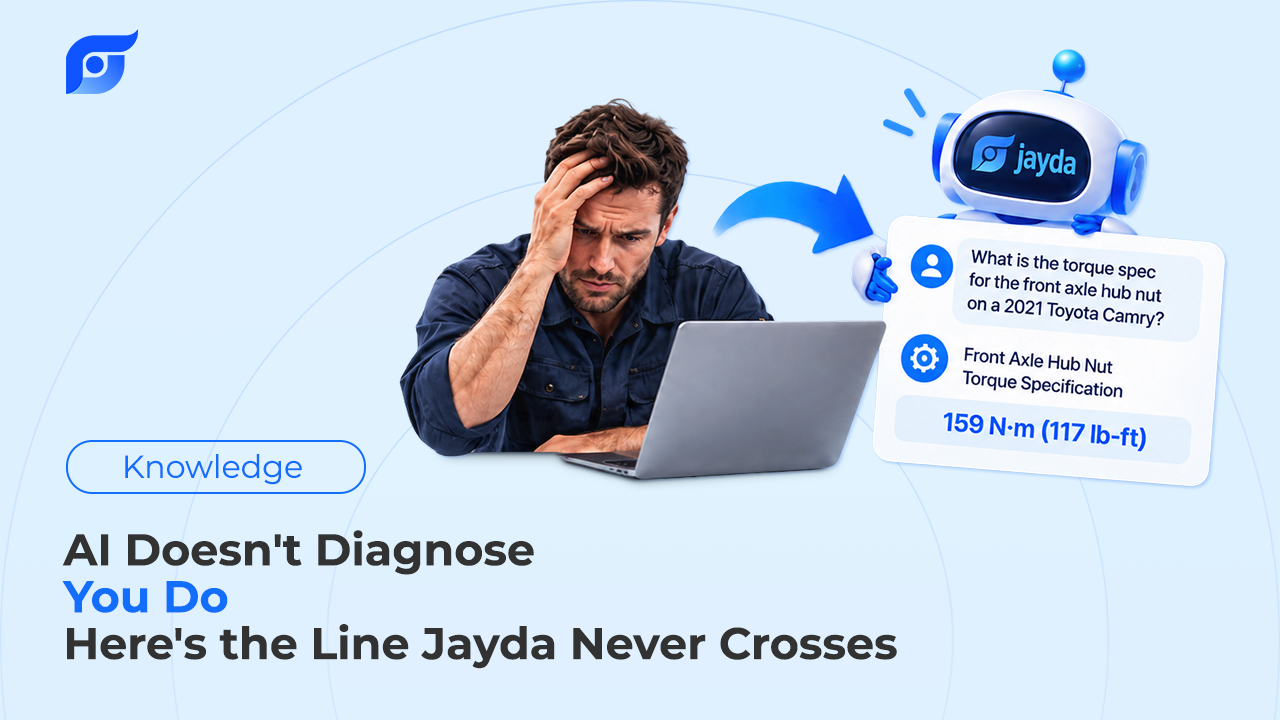
None of that makes the diagnosis for you. It just means the question you answer mid-job changes from “is this close enough?” to “is this the document for this vehicle?” The first question has no good answer at 4:30 on a Friday. The second one does.